
Crown Hair Transplant
The crown covers a larger area than the hairline, and hair grows in a spiral around the whorl. The direction and extent of implantation therefore influence results as much as the number of follicular units.

Crown Hair Transplant
The FUE process for crown hair loss, characterized by a broad area and spiral hair growth, with treatment coverage and priorities determined in advance.
Procedure at a glance
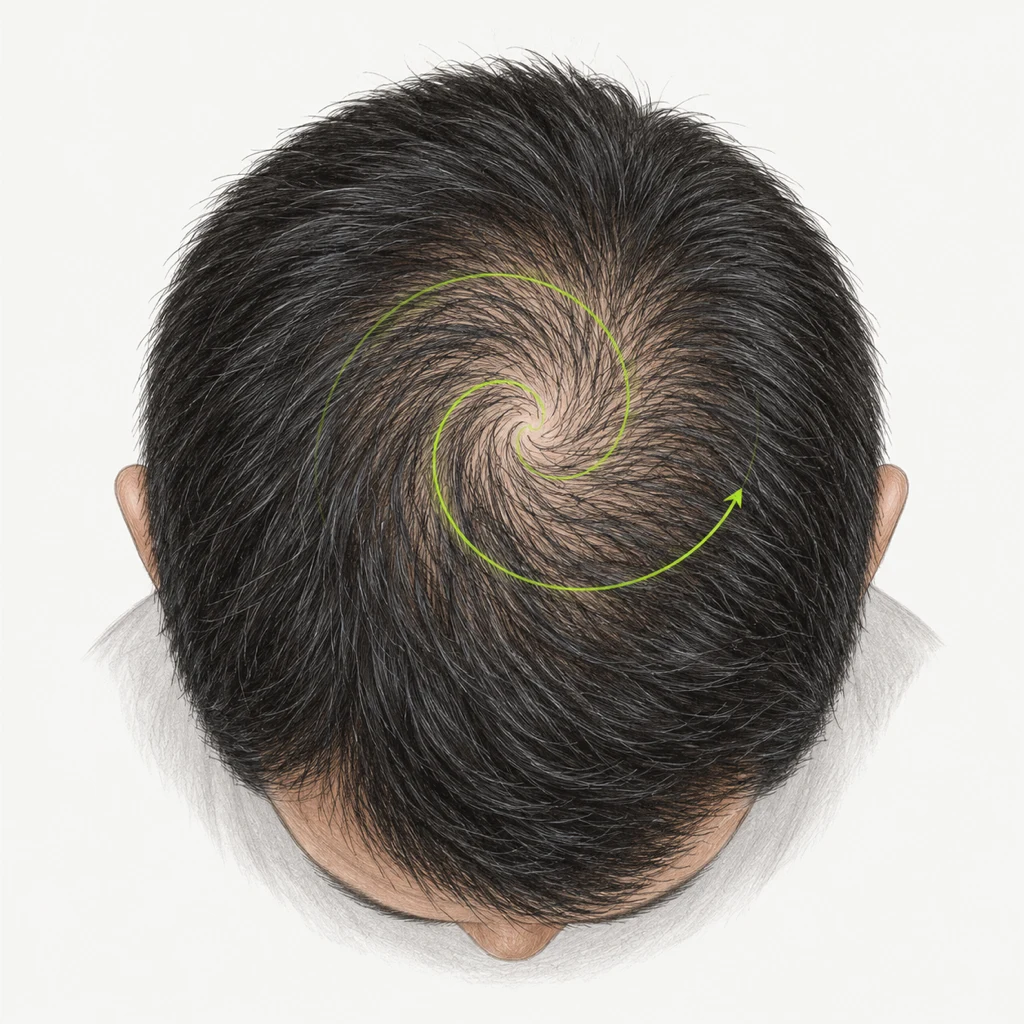
The center of the whorl and its spiral growth direction are assessed.
The crown covers a wider area than the hairline, and its hair grows in a spiral around the whorl. Transplanted hair that does not follow this flow can look misdirected once it grows, so the position of the whorl and the angle of existing hair are checked first.
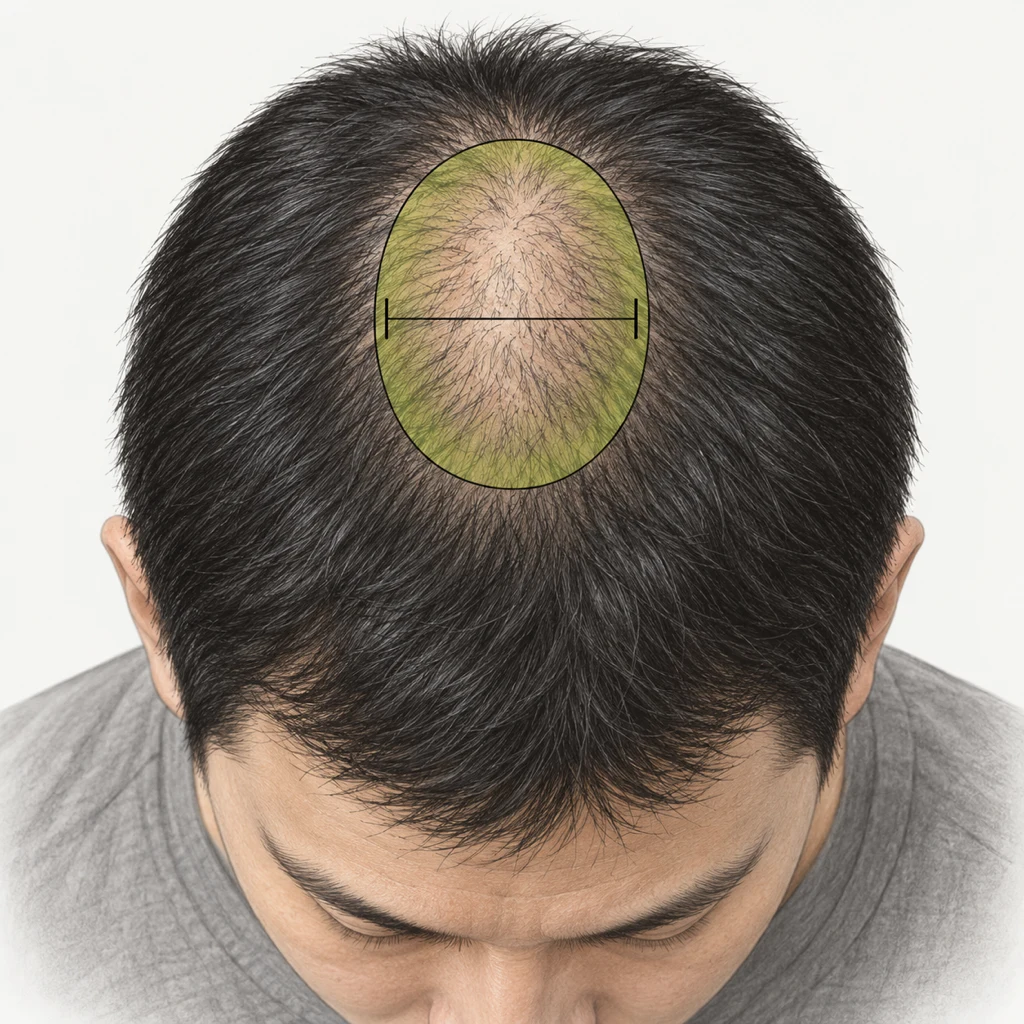
The crown area and available donor supply guide the transplant coverage.
If hairline surgery draws a line, crown surgery fills a surface. When both the hairline and the crown are thinning, we decide where to use the limited donor supply first, and depending on the range the surgery is done at once or divided while monitoring progress.
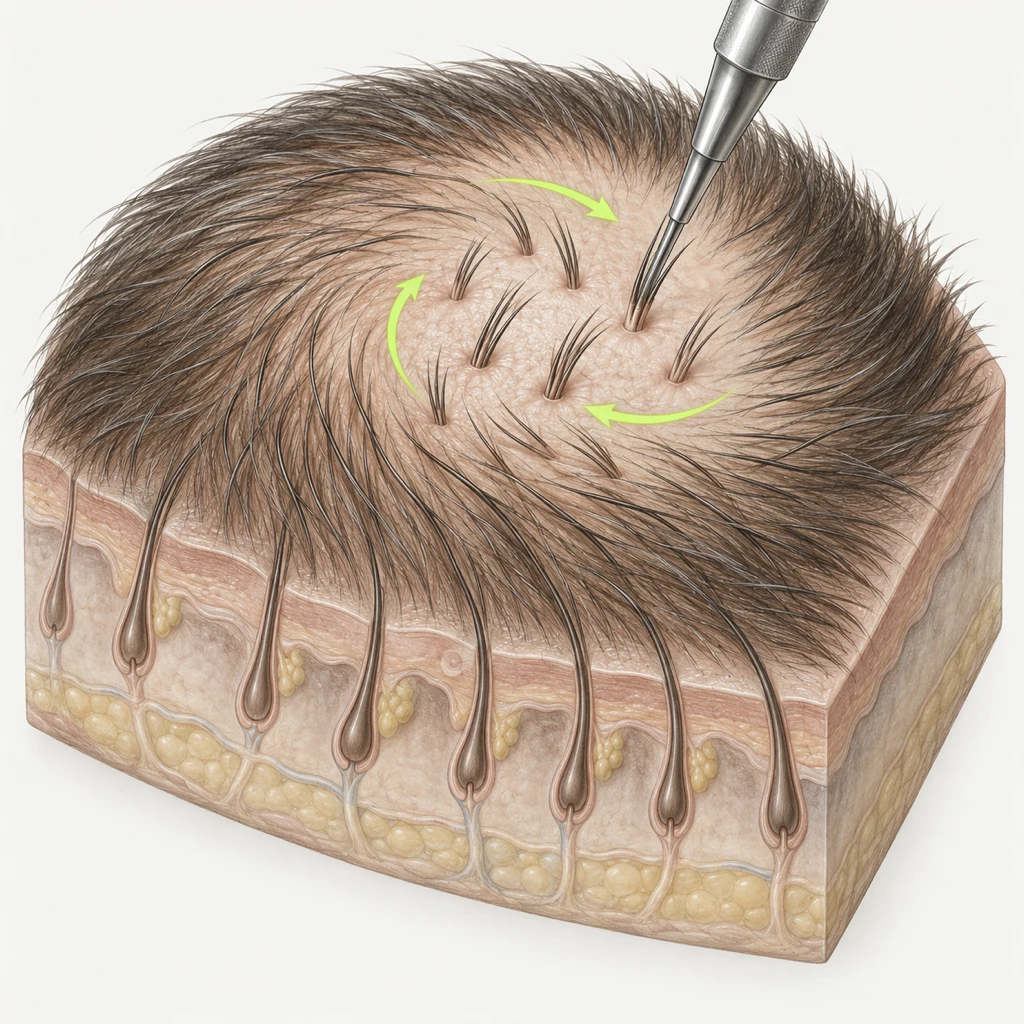
Grafts follow the existing hair pattern around the whorl.
The angle of each graft is set to follow the spiral flow, and the doctor places them personally. Because surrounding existing hair may continue to thin, a plan to maintain it with medication is also made, and the final result is reviewed in progress photos around one year after surgery.
Assess the hair whorl. The center of the whorl and its spiral growth direction are assessed. The crown covers a wider area than the hairline, and its hair grows in a spiral around the whorl. Transplanted hair that does not follow this flow can look misdirected once it grows, so the position of the whorl and the angle of existing hair are checked first.
We plan along the direction of your hair whorl.
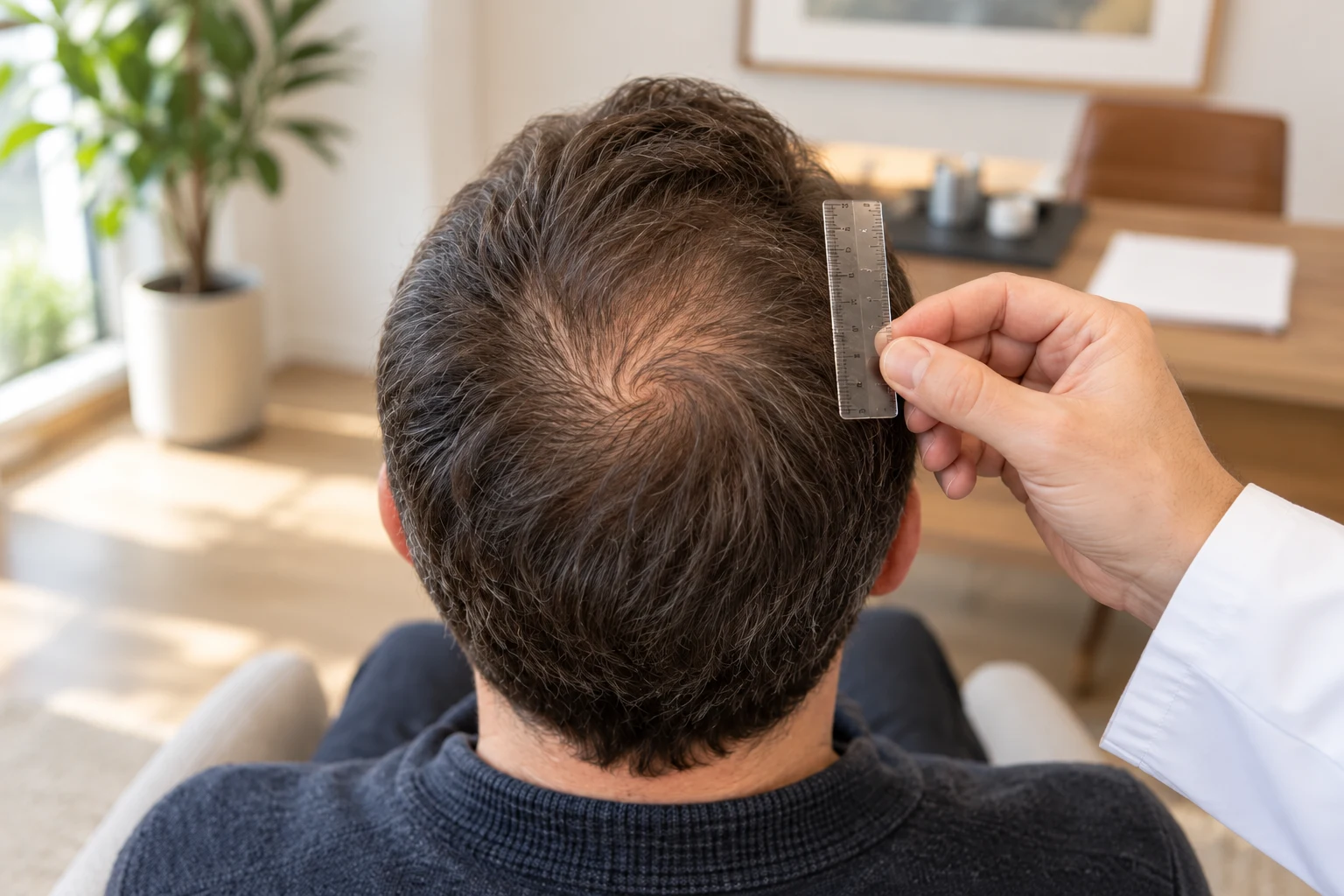
We assess the crown's area and hair direction before setting the treatment scope and priorities.
Three ways crown transplantation differs from hairline transplantation
Hairline correction draws a line, while crown transplantation fills an area. Because the crown is broad, the same graft count can appear less dense. It is also difficult to see in a front-facing mirror, so appreciating results takes time.
Crown hair grows in a spiral around the whorl. If transplanted hair does not follow that flow, its direction may look mismatched after growth. We check the whorl and existing hair angles beforehand and align each follicular unit accordingly.
Crown hair loss often continues to progress. Transplanted hair retains donor characteristics, but surrounding existing hair may fall out, so we also plan medication to maintain it.
Area
Filling a broad area requires more follicular units than a hairline, making prioritization and density distribution important.
Direction
Each follicular unit is implanted at an angle following the spiral around the whorl.
Progression
We consider ongoing hair loss, combine treatment with medication, and stage procedures when needed.
Hairline or crown: which comes first?
Follicles are harvested from the back of your own head, and donor density and thickness determine the safe quantity. If both hairline and crown are sparse, we must decide where to use this limited supply first.
Public videos include a crown-only case with 1,225 follicular units, extensive crown and frontal correction with 3,600 and 3,700 follicular units, and a woman receiving 2,472 hairs at the hairline and 1,000 at the crown. Treatment may be completed together or staged with progress monitoring, depending on coverage and donor supply.
If you only want to reduce the crown’s sparse appearance and your hair is very short or donor supply is insufficient, scalp micropigmentation is also considered. Pigment does not create volume, so transplantation takes priority where frontal volume is needed.
- Crown correction
- 1,225 follicular unitsAfter surgery 1 year
- Extensive crown and frontal correction
- 3,700 follicular unitsAfter surgery 1 year
- Extensive crown and frontal correction
- 3,600 follicular unitsAfter surgery 3 years
- Women’s hairline + crown (FUE + strip surgery)
- Hairline: 2,472 hairs · Crown: 1,000 hairsAfter surgery 8 months
Results of surgery and treatment may vary according to individual condition and aftercare. Please review the photography conditions and follow-up timing together with public materials.
What we review together before you decide
Because crown transplantation covers a broad area, expectations and results can readily differ. We review the following points first during consultation.
Limits of density
The broad crown can look less dense than a hairline with the same number of follicular units. Instead of restoring original density in one session, we plan coverage that reduces sparseness within available donor supply.
Progression of existing hair loss
Transplanted hair remains, but surrounding existing hair may continue to thin. We discuss a management plan including medication.
When to assess results
Transplanted hair may temporarily shed and then regrow. Because the crown is difficult to see in a front-facing mirror, progress is assessed through photographs. Final results are reviewed around one year after surgery.
Conditions of the refund promise
If graft survival is 80% or lower at one year and three months after surgery, 80% of the surgical fee is refunded. Scar surgery and revision procedures are excluded.
Frequently asked questions
It varies greatly with coverage. Public videos show 1,225 follicular units for the crown alone and 3,600–3,700 for extensive crown and frontal correction. Your own needs and available donor supply are assessed during consultation.

Ask every question.
Take time to decide.
We start by listening to your concerns.
Clinic Hours
- Weekdays
- 10:00 — 18:30Last check-in 17:30
- Saturday
- 10:00 — 15:00Last check-in 14:00
- Sundays and public holidays
- Closed
Registration closes one hour before clinic closing.
Directions
Units 501–502, 5F, Carocity, 156 Apgujeong-ro, Gangnam-gu, Seoul