
Revision Hair Transplant
Revision procedures involve more demanding conditions than first-time surgery. We first assess remaining donor supply, existing graft direction, and scar condition, distinguishing where FUE can help from where it has limitations.

Revision Hair Transplant
When revision may be considered—density enhancement, correction of an unnatural hairline, and treatment of a previous strip scar—and the conditions assessed during consultation.
Procedure at a glance
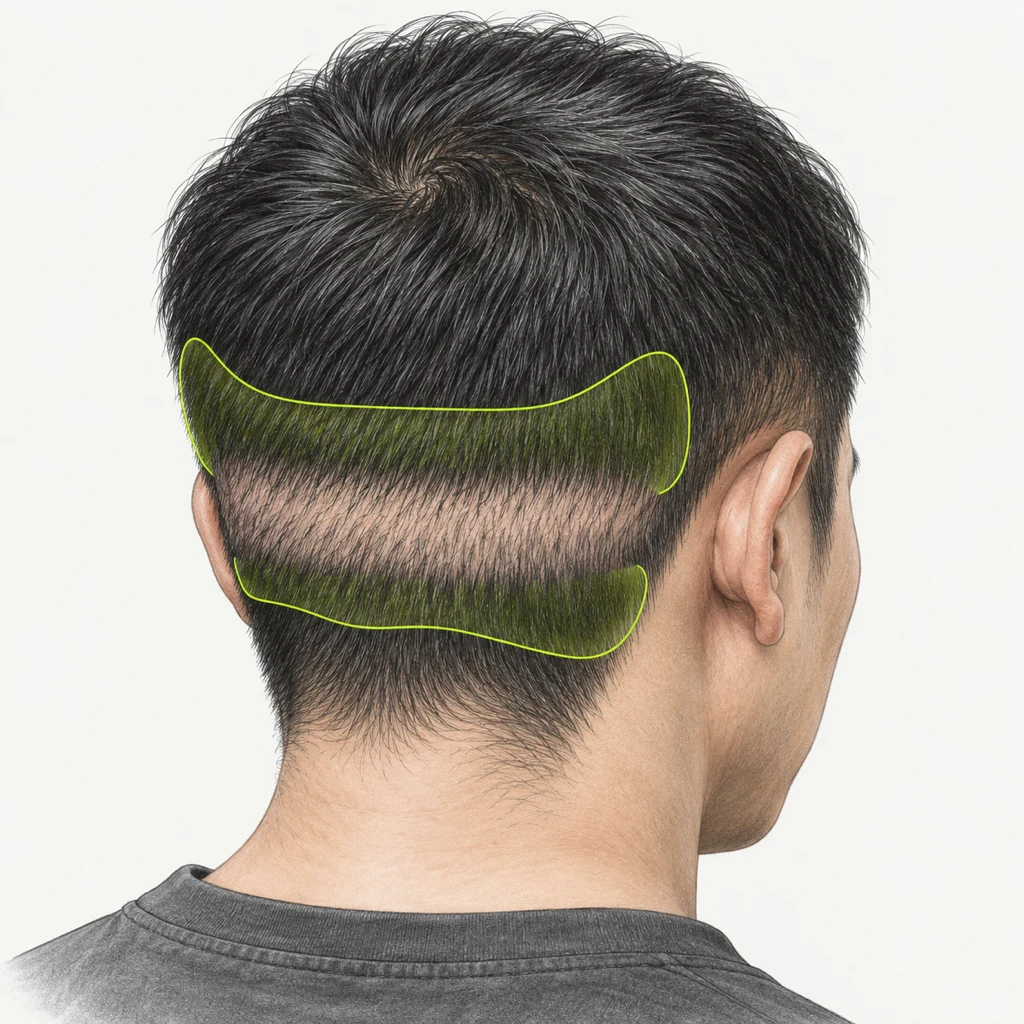
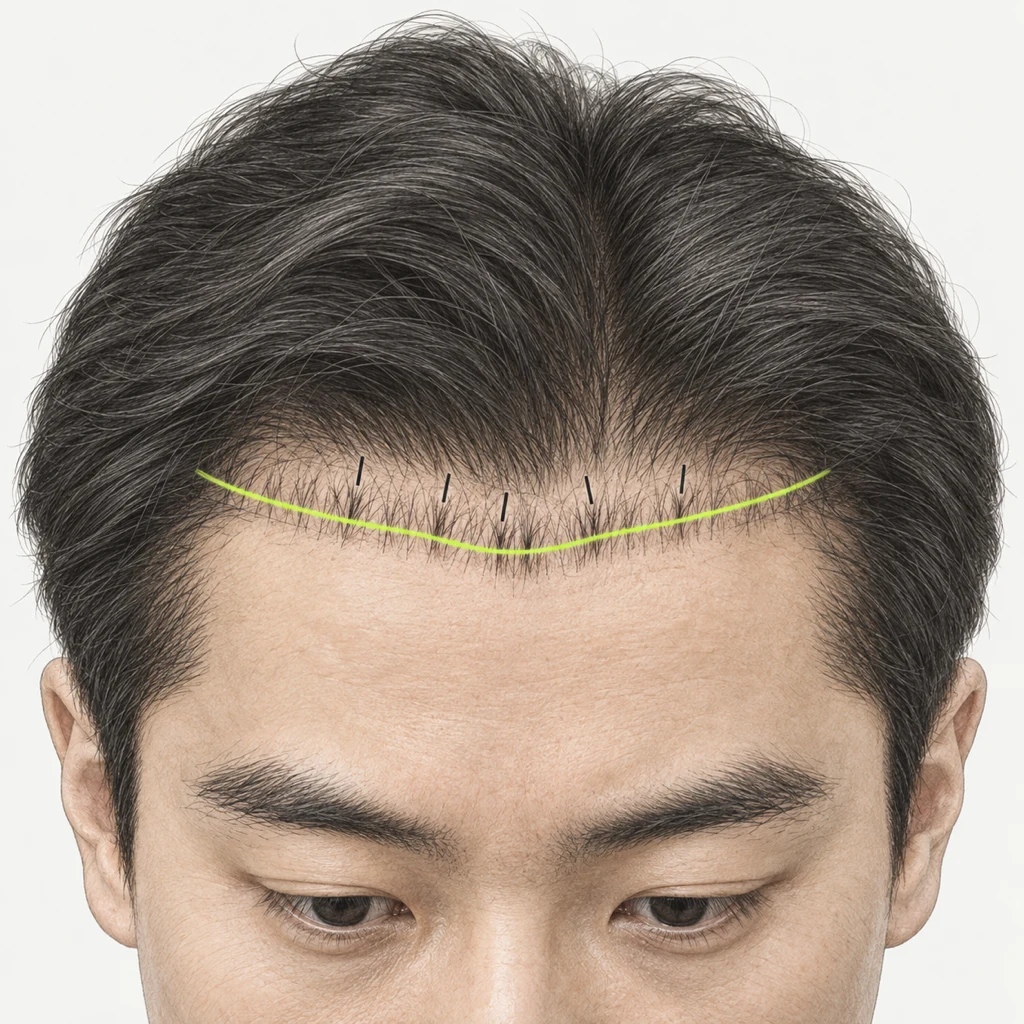
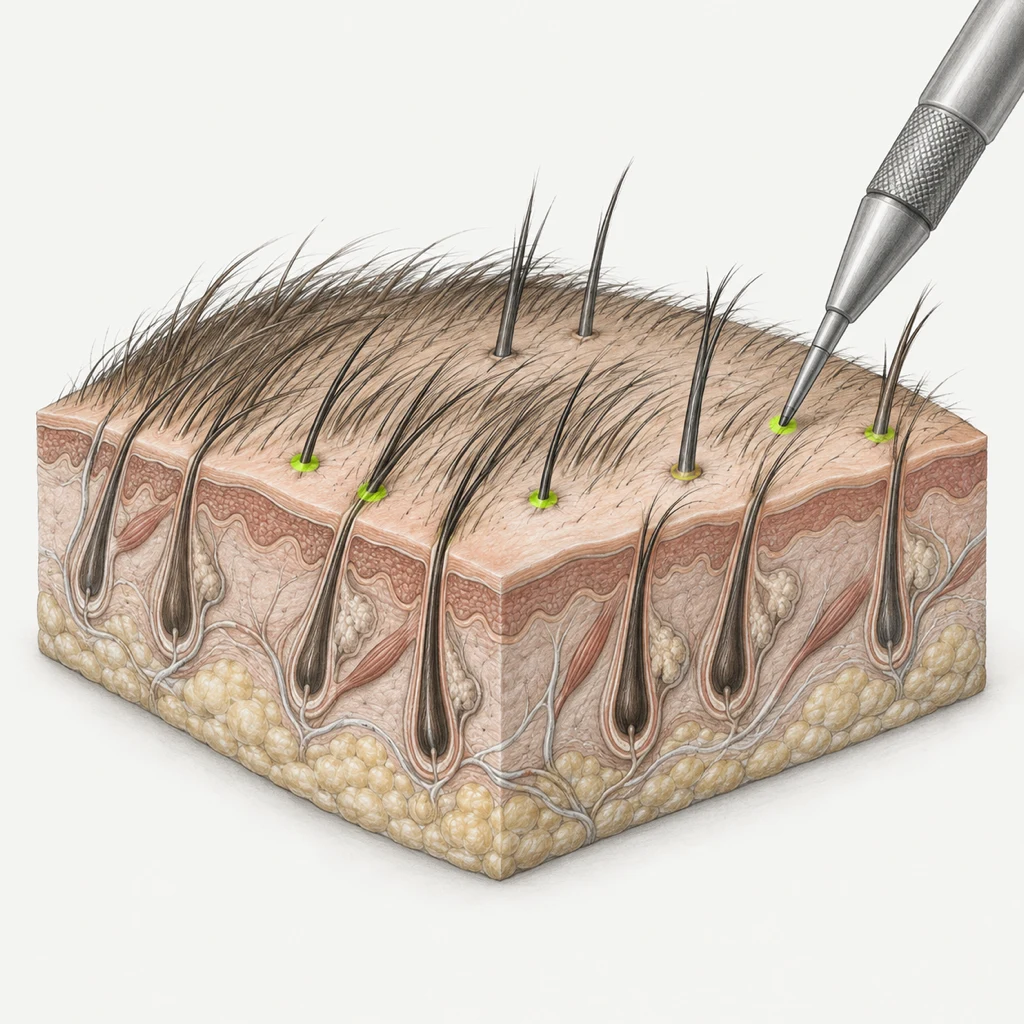
The previous surgery site and remaining donor supply at the back of the scalp are assessed.
Donor hair at the back of the scalp is limited, so we look at how much more can be harvested safely after subtracting what was taken before. Telling us when and how your previous surgery was done, and how many grafts were placed, allows a more accurate plan.
The existing graft direction and hairline are reviewed to identify areas for correction.
Revision surgery does not fully undo the previous result; it improves on it. New grafts must match the direction and thickness of the previously transplanted hair, so we first explain what can change and where the limits are, then set the goal with you.
Placement is planned for the areas that need it, considering existing hair and scars.
Scar tissue has less blood flow than normal scalp, so graft survival may be lower than in other areas. Transplant density is adjusted to the width and thickness of the scar, and the procedure can be divided into sessions if needed.
Assess remaining donor supply. The previous surgery site and remaining donor supply at the back of the scalp are assessed. Donor hair at the back of the scalp is limited, so we look at how much more can be harvested safely after subtracting what was taken before. Telling us when and how your previous surgery was done, and how many grafts were placed, allows a more accurate plan.
We even review traces left by the previous surgery.
We assess remaining donor capacity, transplanted hair direction, and scar condition to plan revision.
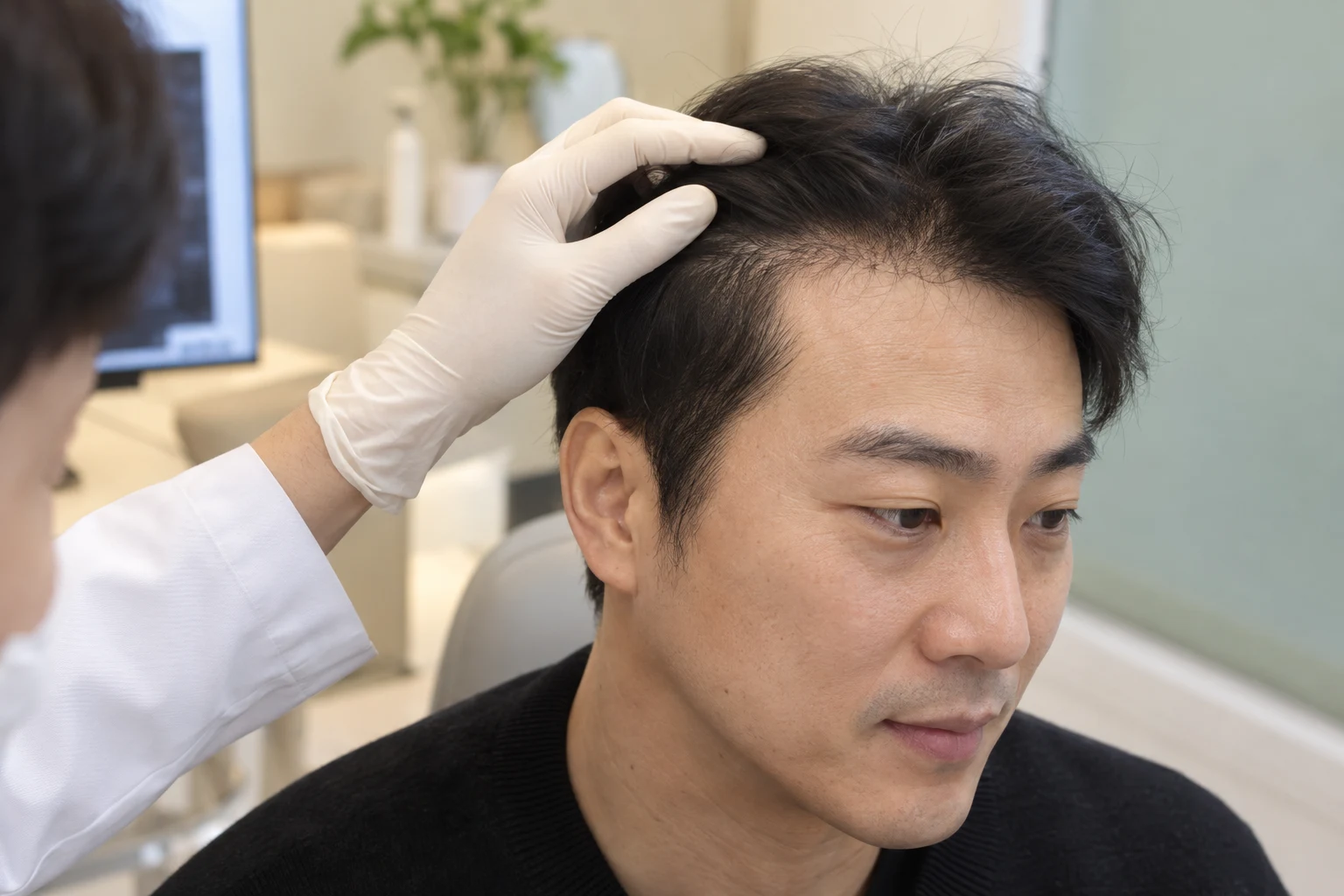
Four situations where revision may be considered
Reasons for revision vary, but consultation cases generally fall into four categories. What we assess and which methods are possible depend on the category.
Density enhancement
The first procedure covered the area, but density looks insufficient. The public video “One-year Results of Revision Surgery to Improve Density” illustrates this type. Additional grafts are aligned between existing transplanted hairs.
Unnatural hairline
A hairline created elsewhere may be straight, too low, or incorrectly directed. Secondary hairline correction repairs such results after assessing existing graft direction, density, and remaining donor supply.
Donor strip scar
A previous strip transplant may leave a linear scar at the back of the head, or necrosis may widen it. Follicles are transplanted into the scar using FUE to cover it with hair. CASE 3 in the scalp scar treatment cases illustrates this type.
Donor limits after repeated strip surgery
Repeated strip procedures may make further adequate strip harvesting difficult. In these second or third procedures, FUE can often provide enough follicular units for several thousand or more hairs.
What we assess first during a revision consultation
Revision builds on the results of the first procedure. Sharing its date, method, and graft quantity allows much more precise planning.
Remaining donor supply
We assess how much more can safely be harvested after accounting for previous donor harvesting.
Existing transplanted hair
We check direction, density, and thickness to align new follicular units.
Scar condition
We assess the width, thickness, and blood flow of strip scars to determine implantation density.
Aligning expectations
We first explain possible improvements and limitations, then set goals together.
What to know before revision surgery
Revision has more limited conditions than first-time surgery. We review the following points during consultation so you can understand expected improvements and limitations before deciding.
Limits of donor supply
Donor hair is finite. The quantity harvested previously may reduce what can be transplanted this time, requiring priorities within that supply.
Graft survival in scar tissue
Scar tissue has less blood flow than normal scalp, so graft survival may be lower than in ordinary areas. Implantation density is adjusted according to scar thickness and condition, and treatment may be staged.
Blending with existing transplanted hair
New hair must match the direction and thickness of existing grafts. This procedure improves on the previous result rather than completely reversing it.
Exceptions to the refund promise
The promise to refund 80% of the surgical fee if a hair transplant fails does not apply to scar surgery or revision procedures.
Frequently asked questions
Yes. Tell us the date, method, and graft quantity of the previous procedure and send current photographs. We will assess remaining donor supply and existing graft condition to explain available approaches.

Ask every question.
Take time to decide.
We start by listening to your concerns.
Clinic Hours
- Weekdays
- 10:00 — 18:30Last check-in 17:30
- Saturday
- 10:00 — 15:00Last check-in 14:00
- Sundays and public holidays
- Closed
Registration closes one hour before clinic closing.
Directions
Units 501–502, 5F, Carocity, 156 Apgujeong-ro, Gangnam-gu, Seoul