
Men’s Hair Transplant Surgery details
After surgery, we provide a concentrated graft-care essence to support graft survival.

The FUE procedure
After surgery, we provide a concentrated graft-care essence to support graft survival.
There is no pain at all during the entire surgery, and we will guide you on how to disinfect and shampoo on your own after the surgery.
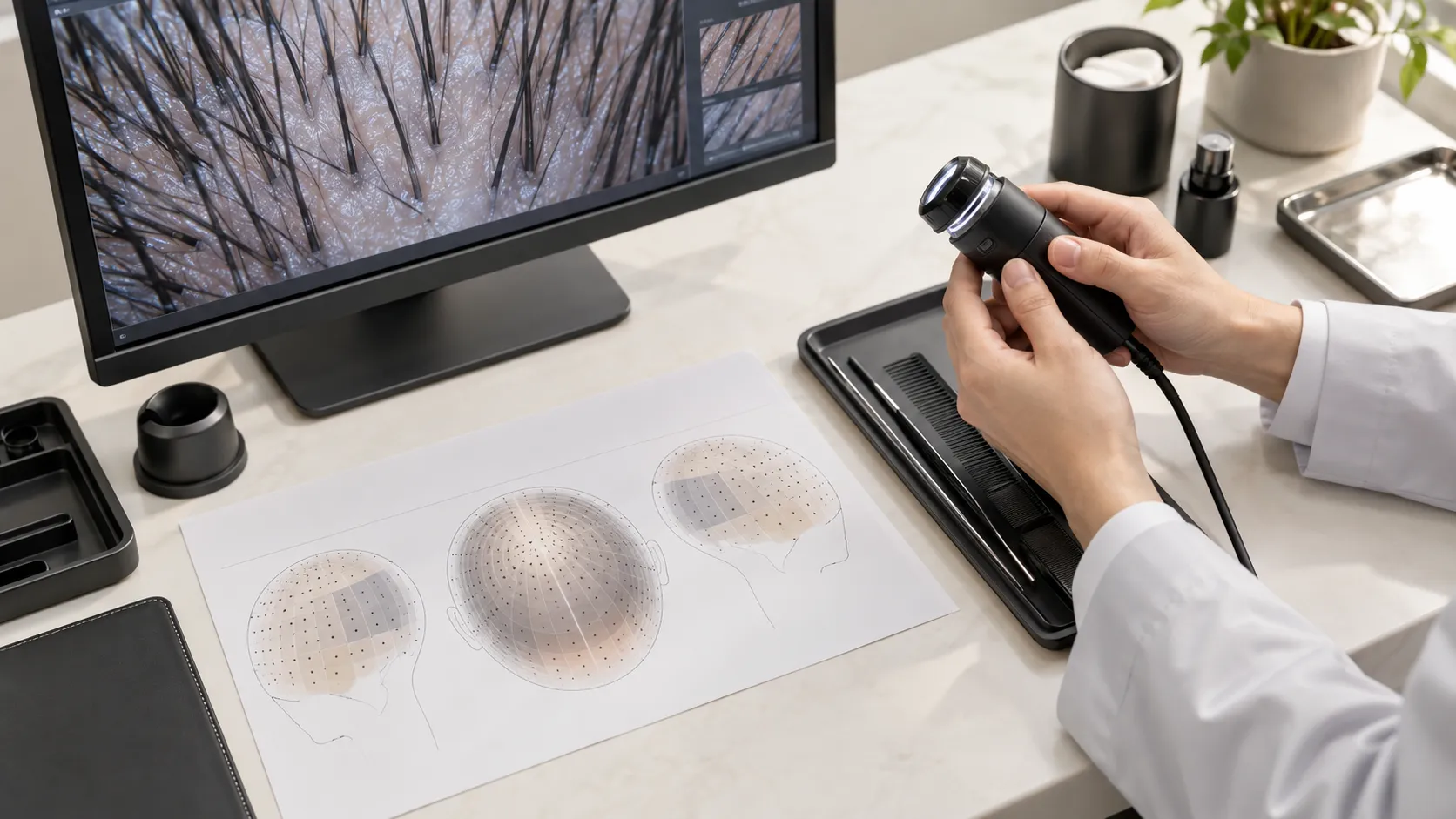
Planning and preparation
Pre-operative consultation and design
Before surgery, the doctor explains the procedure in detail and draws the surgical design.
occipital hair cutting
If needed, hair at the back of the head is trimmed short and the donor area is determined.
Sedation
Sedation is administered. It lasts approximately 10 minutes, allowing you to wake after a brief sleep.
Harvesting and inspection
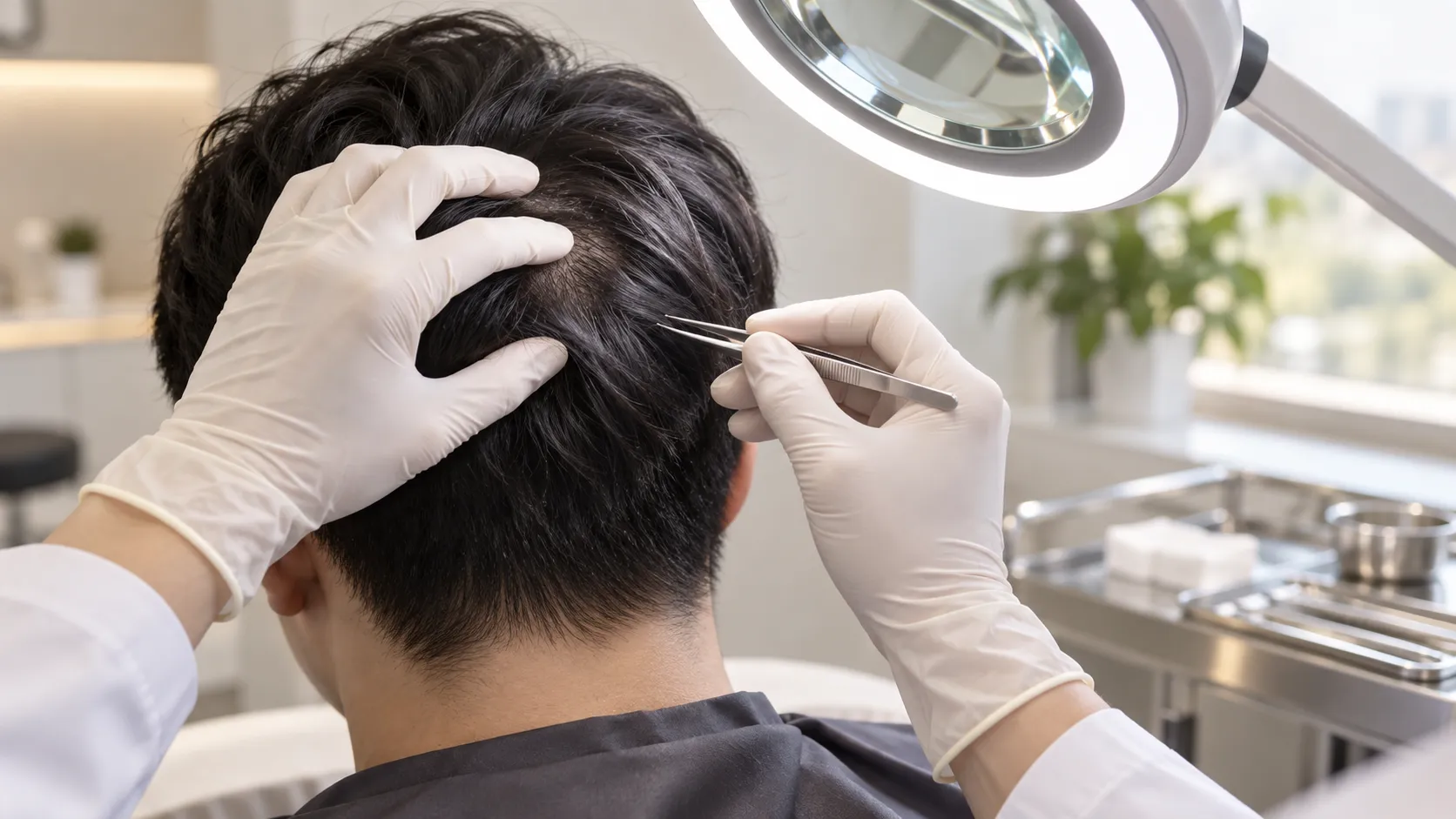
local anesthesia
Local anesthesia is administered while you are sedated so you do not feel pain from the anesthetic injections.
Follicular unit harvesting
After anesthesia, follicular units are harvested quickly and precisely using Moh’s FUE System.
Microscopic hair follicle examination
Each harvested follicular unit is individually inspected under a high-magnification microscope.
Preservation and implantation
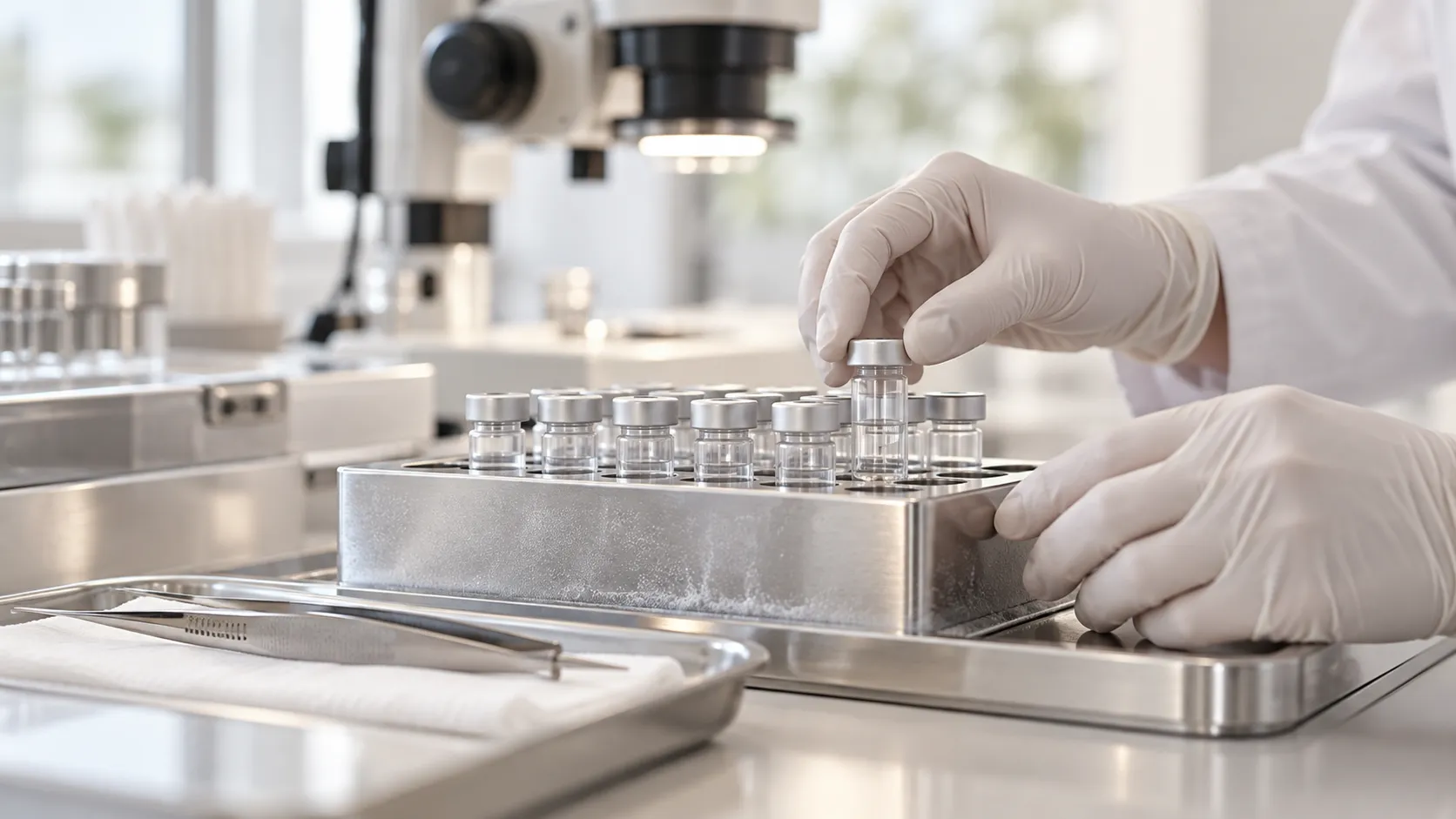
Preservation of hair follicles in special preservative solution
Harvested follicular units are consistently stored in a keep-cooling device maintained at 4°C and kept in PRP and a special preservation solution to maintain their condition.
Implantation by the doctor
The doctor personally implants the harvested follicular units. Having the doctor perform implantation is very important for creating a natural hair flow and distribution. Implantation by several nurses versus a single specialist results in a marked difference in the natural appearance of the final outcome.
Post-operative care and return home
You leave the clinic wearing a hat.
What is FUE graft harvesting?
FUE harvests and transplants hair from the back of the head without removing a strip of scalp with a scalpel.
FUE hair transplantation is now the mainstream approach in hair transplant surgery. A specially designed punching machine with a diameter of 0.8 to 1.0 mm is used to harvest the hair follicle together with some of the surrounding tissue.
It is an extremely delicate task and takes a very long time to master. The doctor’s fine manual technique and proficiency have an absolute influence on the outcome of the surgery.
Dr. Moh Jae-seong has performed thousands of hair transplant procedures over many years using techniques including FUT, FUE, and ARTAS robotic surgery. Based on this experience and the precision of a plastic surgery specialist, Dr. Moh developed Moh’s FUE System and performs surgery with it.
There are very few plastic surgeons in Korea who specialize in FUE hair transplantation and perform the surgery from start to finish.
What is the difference between a follicle and a hair?
Transplanting hairs together as a follicular unit is called follicular unit transplantation.
Each hole contains one hair, or two to three hairs. Separating 2 to 3 hairs one by one reduces the survival rate, so they are transplanted together.
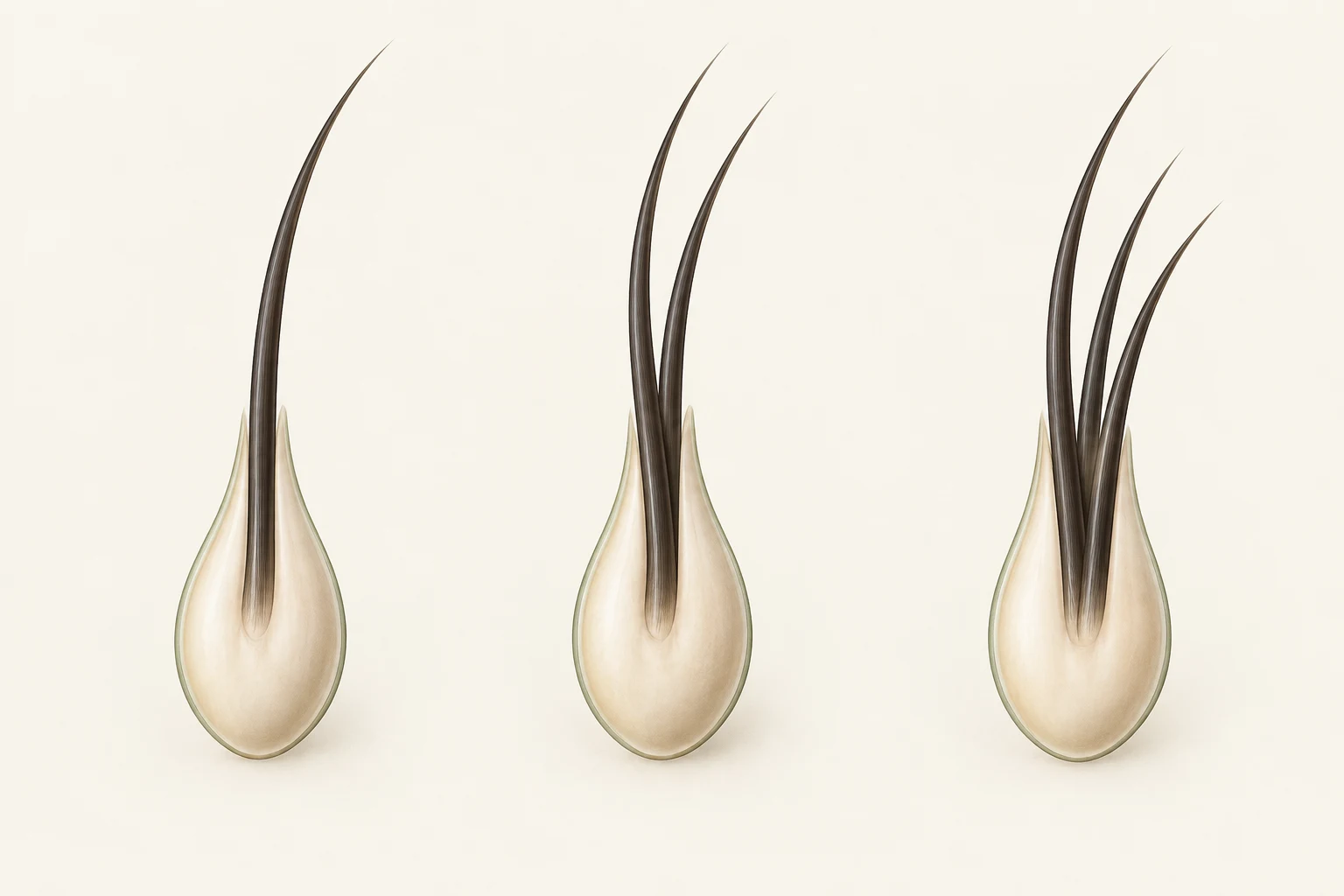
Follicular units and hair counts explained
In our consultations, graft counts refer to follicular units, while hair counts refer to individual strands.
This example assumes two hairs in each follicular unit.
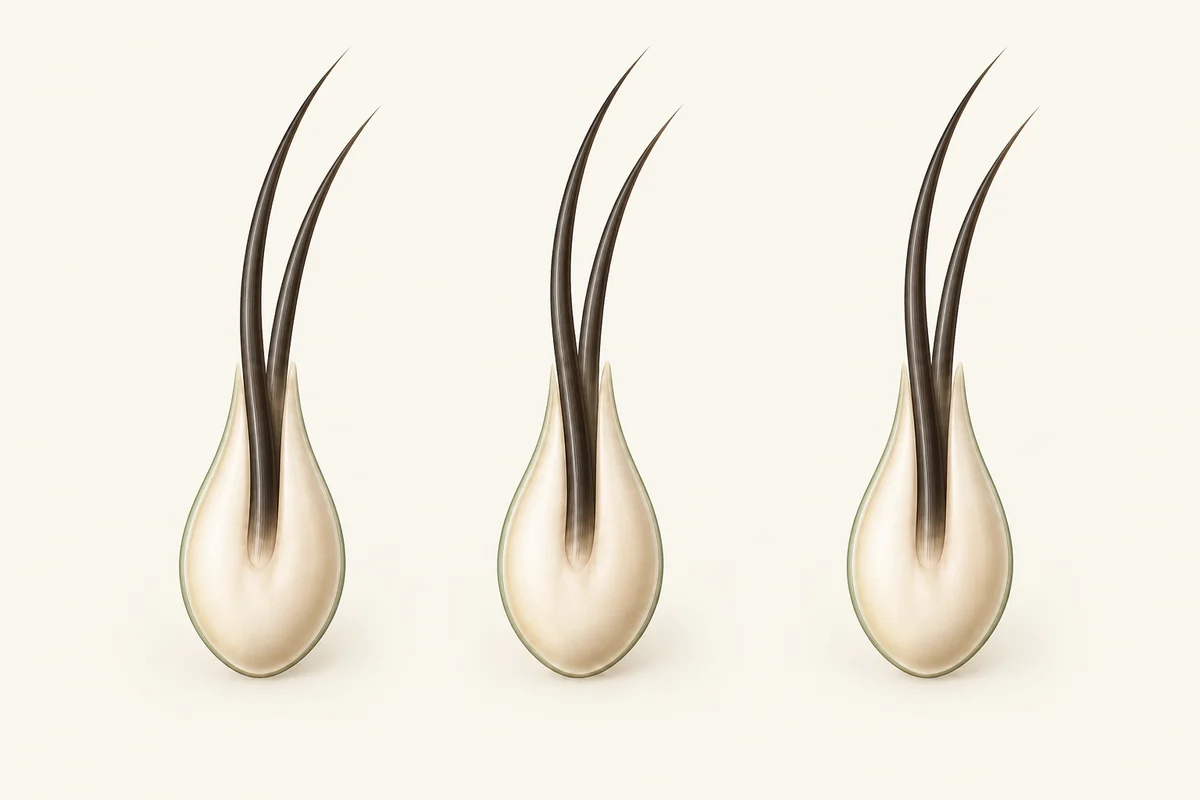
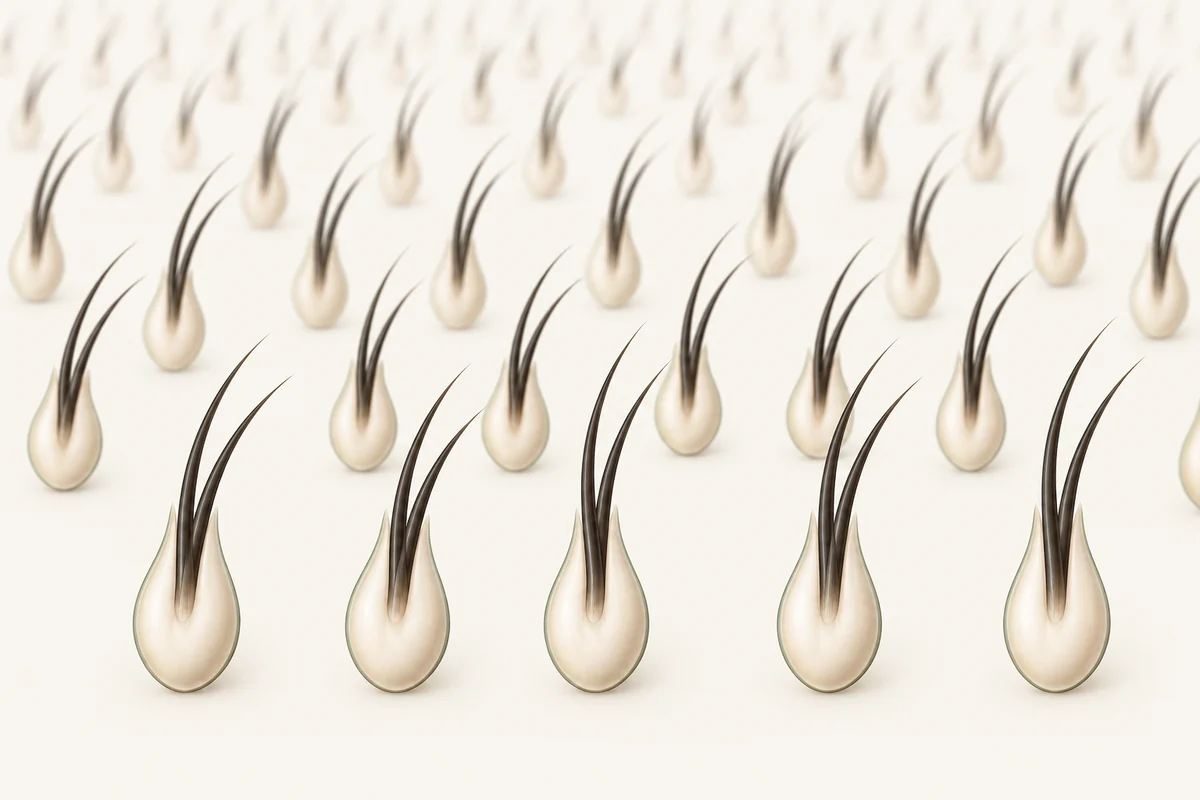
Since the number of hairs varies per follicular unit, the actual number of hairs may vary.
Comparing FUE and strip hair transplantation
| Comparison | FUE | Strip Surgery |
|---|---|---|
| Linear scar after surgery | None | Present |
| Pain and discomfort at the back of the head after surgery | Almost none If incision pain is 100, non-incision pain is about 1 | Significant pain for 1–2 weeks after surgery Discomfort for months to a year |
| Number of hairs that can be harvested | Per session, up to 8,000–10,000 hairs depending on the patient | Difficult to harvest 5,000 hairs or more in a single procedure |
| Graft Survival Rate | 90~95% | 90~95% |
| Daily activities after surgery | Possible immediately | Possible immediately |
| Washing your own hair after surgery | Possible from the same day or the next day | Possible from day 3 |
| Shaving the back of the head for surgery | Choice of shaved, partially shaved, or unshaven harvesting | No shaving |
| Average thickness of transplanted hair | Thick The doctor selects and transplants only thick hairs | Harvested all at once in a strip Thick and thin hairs are mixed together |
| Surgery duration (1,500 follicles, 3,000 hairs) | 4–6 hours | 3–4 hours |
| Second and third procedures | Patients who have had multiple incision surgeries often cannot harvest enough additional hair via the incision method. Even in second or third surgeries, the non-incision method can harvest several thousand hairs. | Additional hair cannot be collected after 2-3 surgeries. |
FUE donor-area shaving options
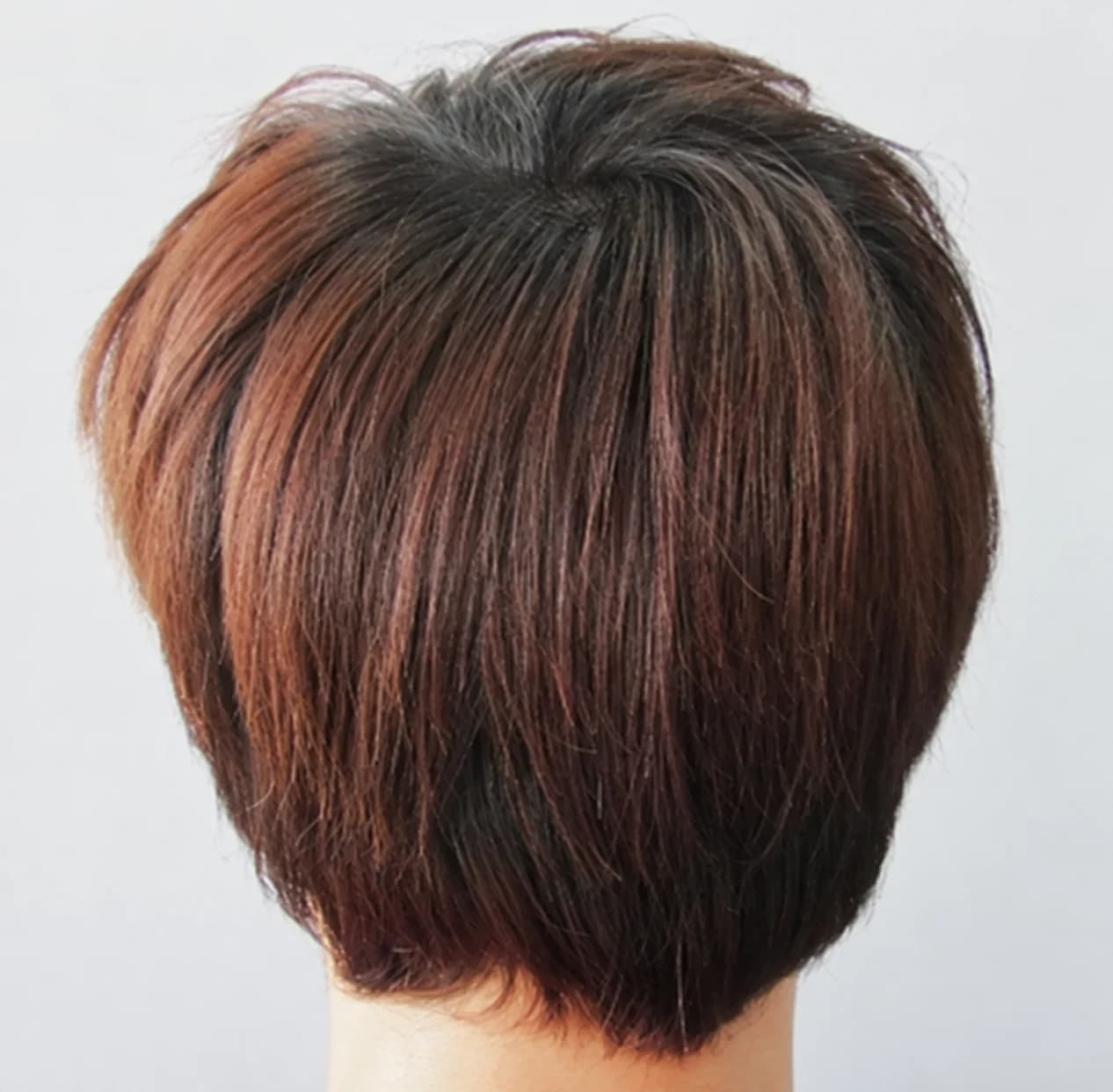
Unshaven Harvesting
Harvesting is performed without cutting the hair at the back of the head. This is often chosen by people whose work or social activities make shaving difficult.
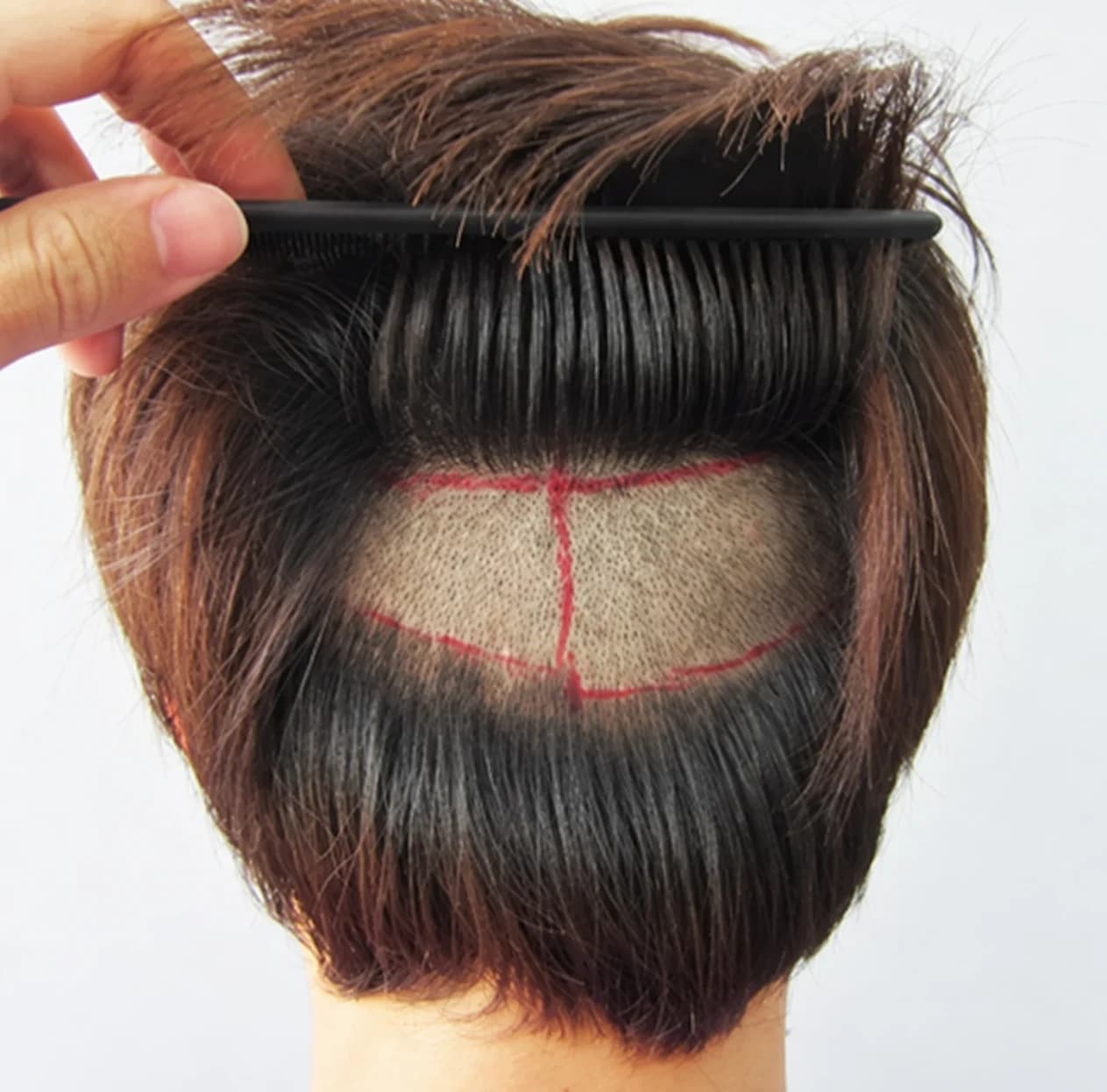
Partially Shaved Harvesting
Only part of the hair at the back of the head is trimmed short, as shown. The hair above can be let down to conceal the surgical area, but the number of hairs that can be harvested is limited.
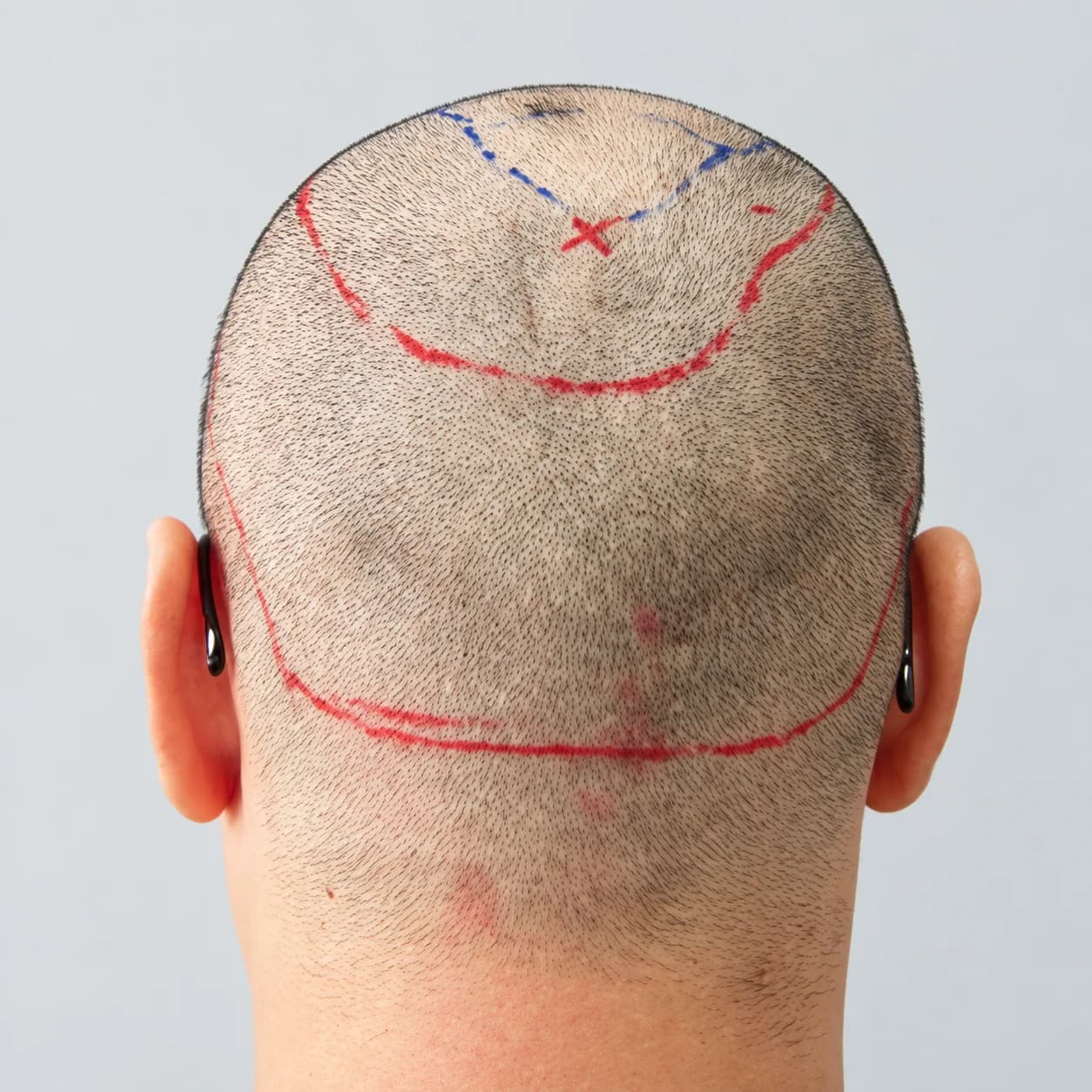
Shaved Harvesting
The hair at the back of the head is shaved as shown before surgery. This method allows large-volume harvesting and transplantation (8,000–10,000 hairs).
Advantages of Moh’s FUE System
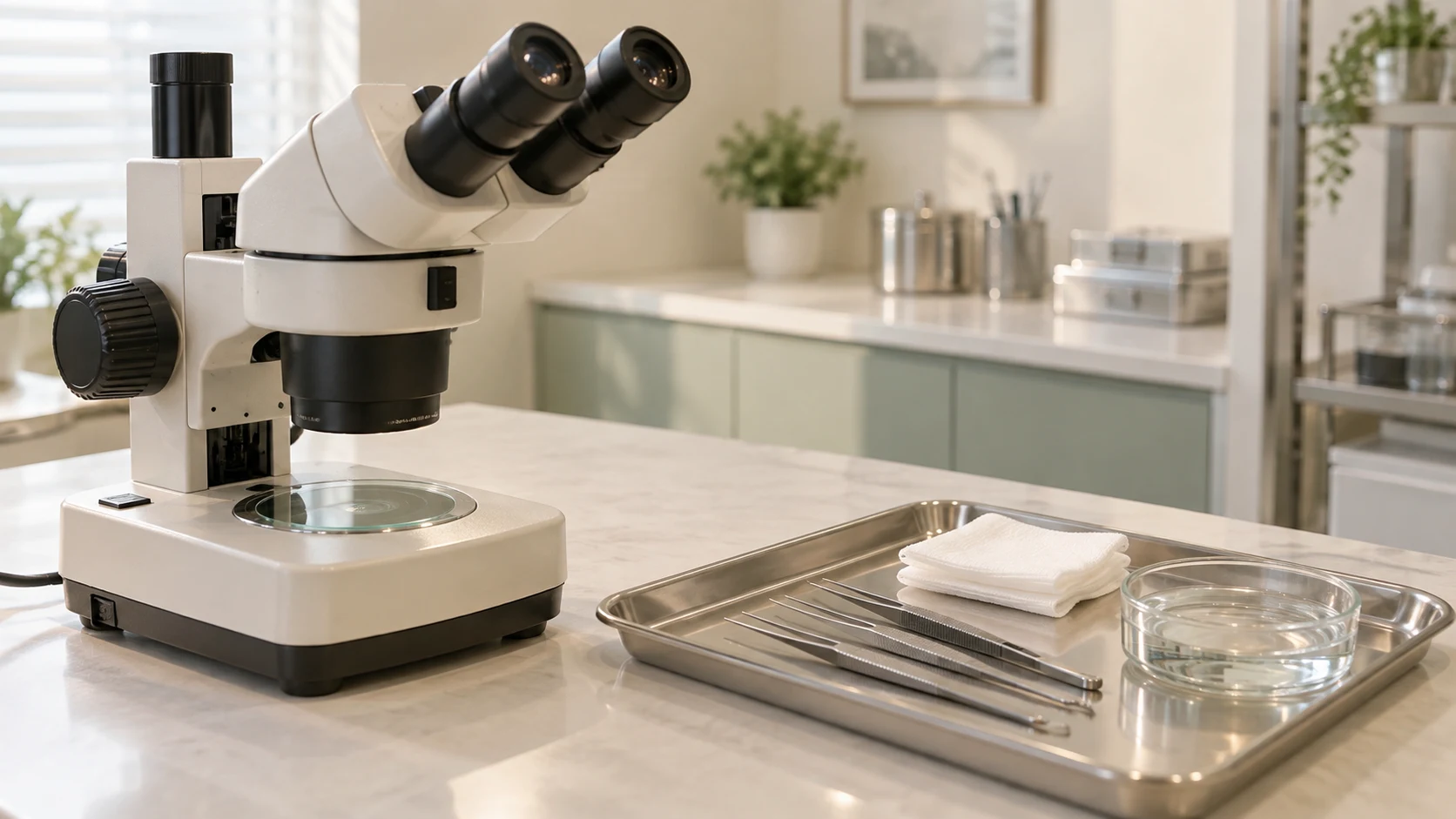
The most important aspect of FUE is obtaining healthy follicular units. Moh’s FUE System offers a stable surgical technique without shaking, with a very low follicle damage rate, making it an excellent system for obtaining healthy grafts. The average follicle damage rate is below 3%, lower than the damage rate during graft dissection in strip surgery.
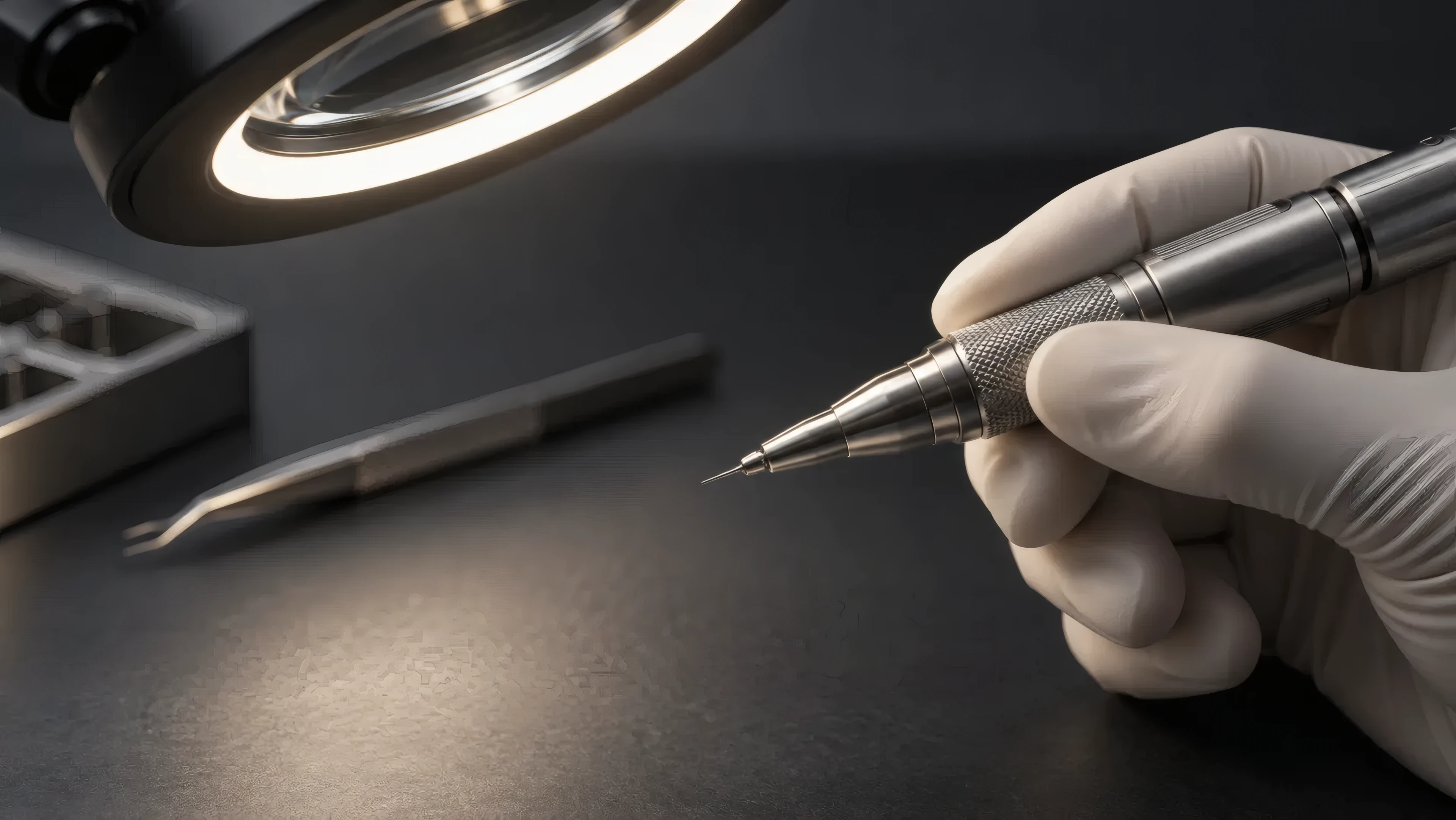
A surgical method tailored to the scalp
Slits and implanters selected for your scalp
We combine the two techniques according to each patient’s scalp condition. Every patient’s scalp differs, and even on the same patient, thickness, elasticity, firmness, and softness vary between the center, sides, top, and crown. By combining slits and implanters as appropriate, we apply the advantages of both techniques to achieve the best possible result.
Comfortable positioning and rapid graft harvesting
| Comparison | Conventional FUE technique | Moh’s FUE System |
|---|---|---|
| Patient position | Lying face down or in an unsupported position (prolonged surgery can cause very severe shoulder and lower-back pain) | You can receive surgery comfortably while seated and watching a video. |
| Surgeon position | The follicle angles the surgeon sees constantly change. Higher follicle damage rate and heavier surgeon fatigue. | The follicle angles the surgeon sees stay consistent. Lower follicle damage rate and less surgeon fatigue. |
| Number of hairs that can be harvested | 400–500 follicular units harvested per hour | 800–1,000 follicles harvested per hour Fast harvesting shortens the time follicles spend outside the body. This plays a decisive role in raising the survival rate. |
Body Hair Transplantation (BHT)
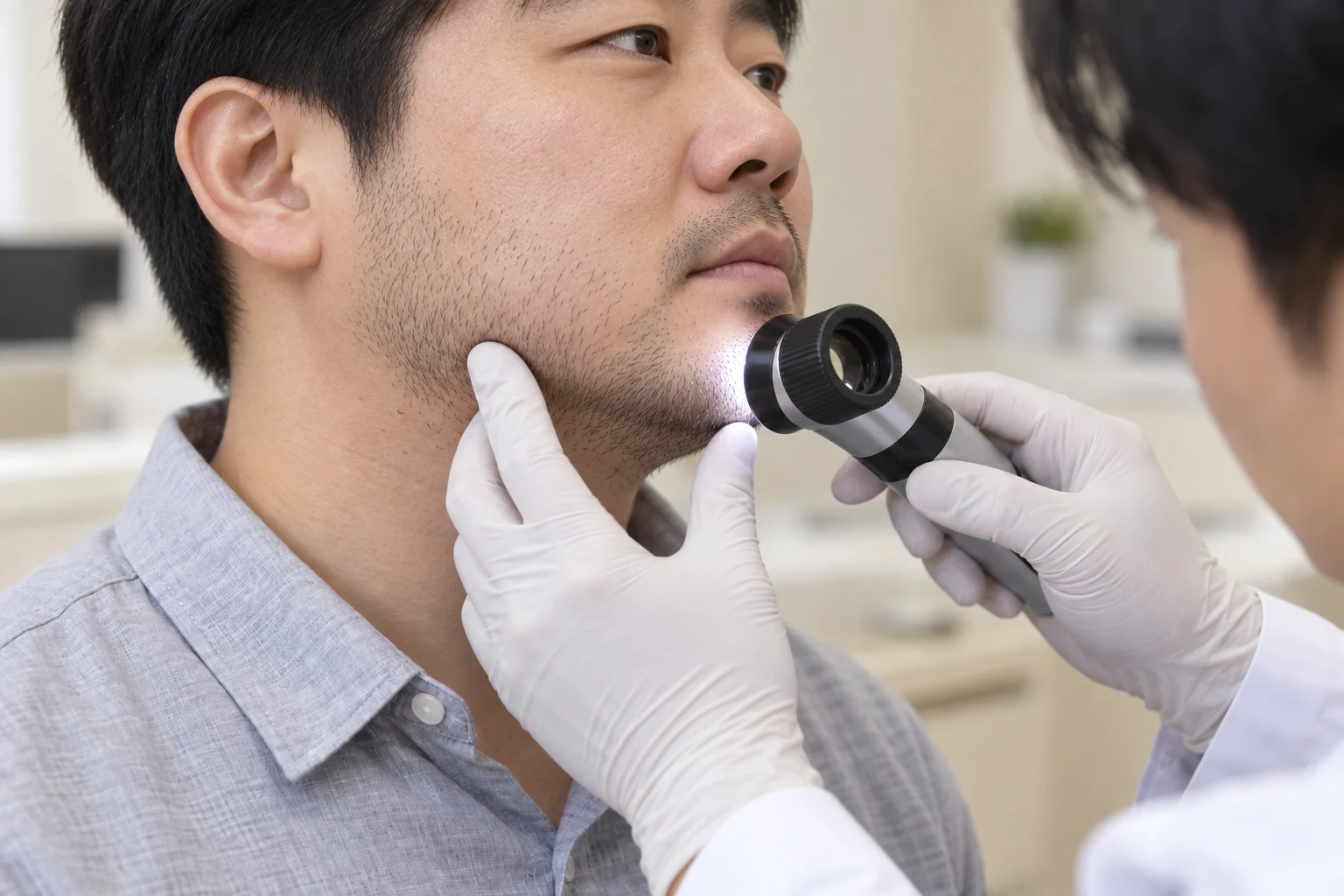
If there is not enough hair to cover the entire scalp, more abundant results can be achieved by transplanting body hair such as beard or chest hair.
Most male hair loss patients tend to have heavy beard or body hair because of the influence of excess male hormones. Until recently, body hair transplantation was regarded as an undesirable procedure, but advances in FUE hair transplant surgery have made it a way to supplement a scalp lacking hair.
Many patients who have had beard hair transplanted to the scalp are pleased both with fuller scalp hair and with having less dense, fast-growing facial hair to manage.
Body hair transplantation is only possible through FUE surgery. Dr. Moh Jae-seong has extensive surgical experience and know-how in the field of body hair transplantation.

Ask every question.
Take time to decide.
We start by listening to your concerns.
Clinic Hours
- Weekdays
- 10:00 — 18:30Last check-in 17:30
- Saturday
- 10:00 — 15:00Last check-in 14:00
- Sundays and public holidays
- Closed
Registration closes one hour before clinic closing.
Directions
Units 501–502, 5F, Carocity, 156 Apgujeong-ro, Gangnam-gu, Seoul