
Men’s Hair Transplant
Hair Transplant for a Receding Hairline
A receding hairline transplant involves more than filling the two recessed corners. We first design a hairline connecting the front and sides, then determine timing and coverage while considering future hair loss.

Hair Transplant for a Receding Hairline
The process and timing of correcting recession at both forehead corners through hairline design and FUE.
Procedure at a glance
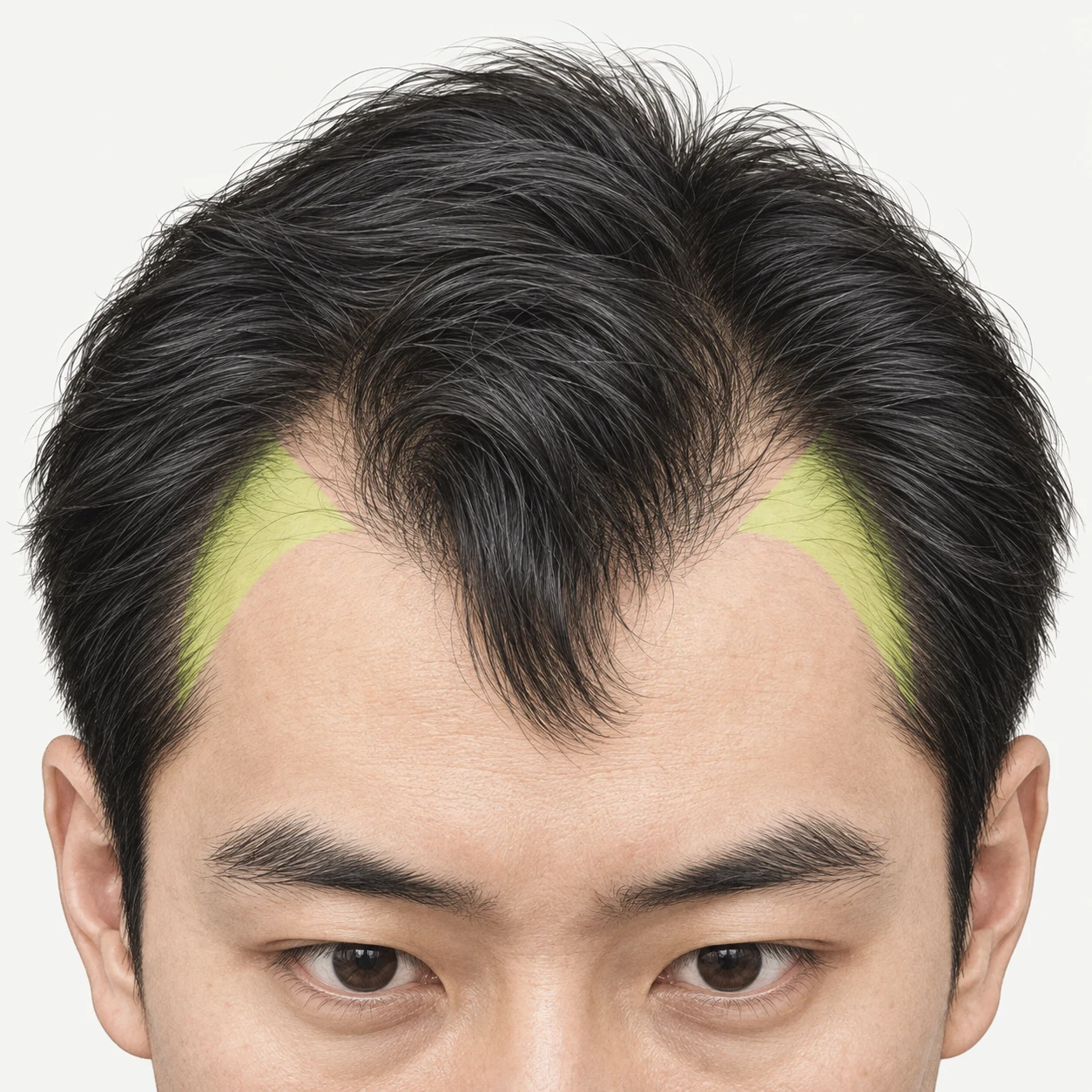
Both receding corners are assessed alongside the existing hairline.
Before filling the M-shaped corners, we first consider whether now is the right time to transplant. The range and order differ depending on whether it is early M-shaped loss or loss that extends to the crown, and the number of grafts needed is confirmed against what the back of the scalp can supply.
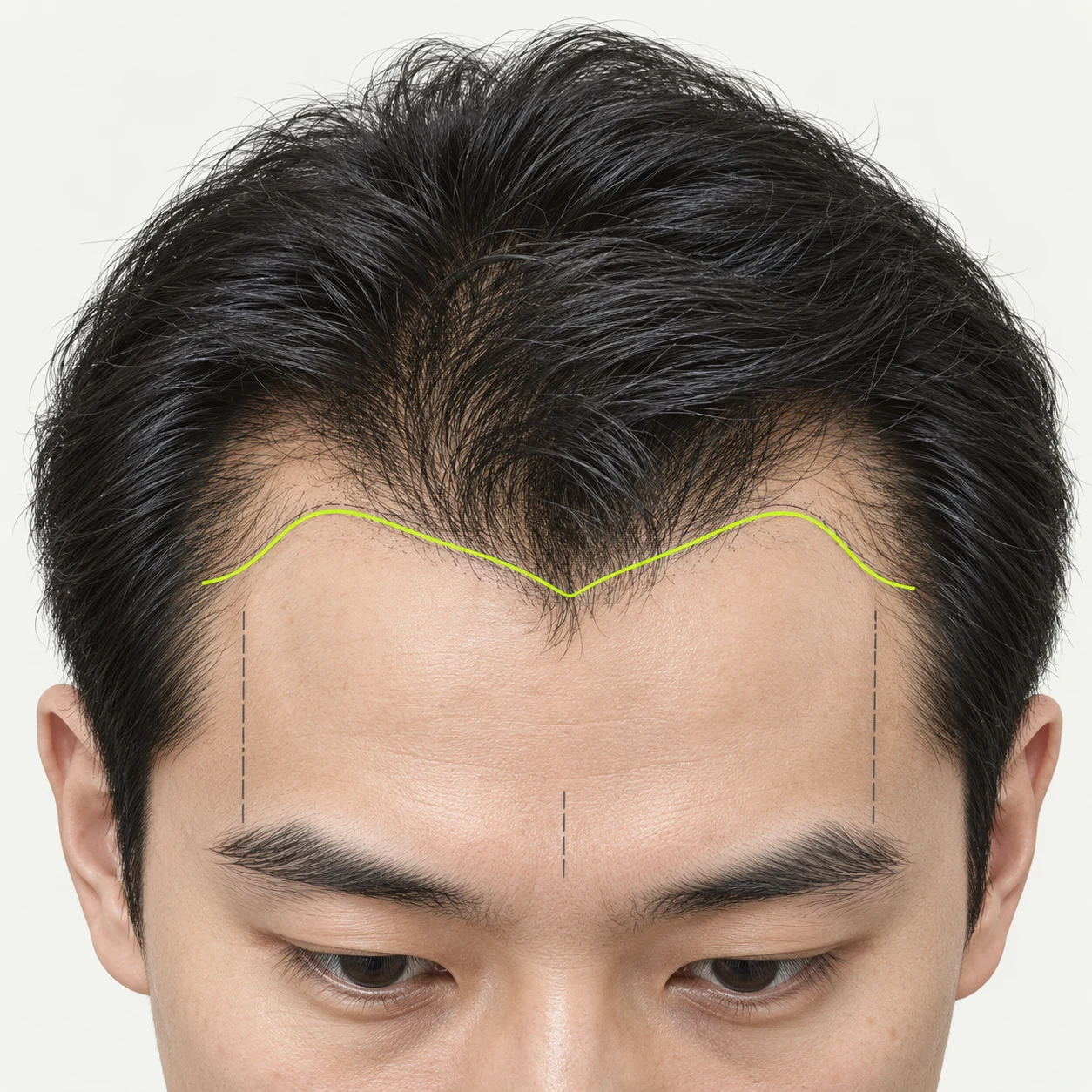
A line is planned from the central hairline toward both temples.
Filling the M-shaped corners with a straight line can look unnatural, so the angle is softened while keeping a curve that suits your facial proportions. The height you want and the height achievable within the available grafts may differ, so the two are reconciled at the design stage.
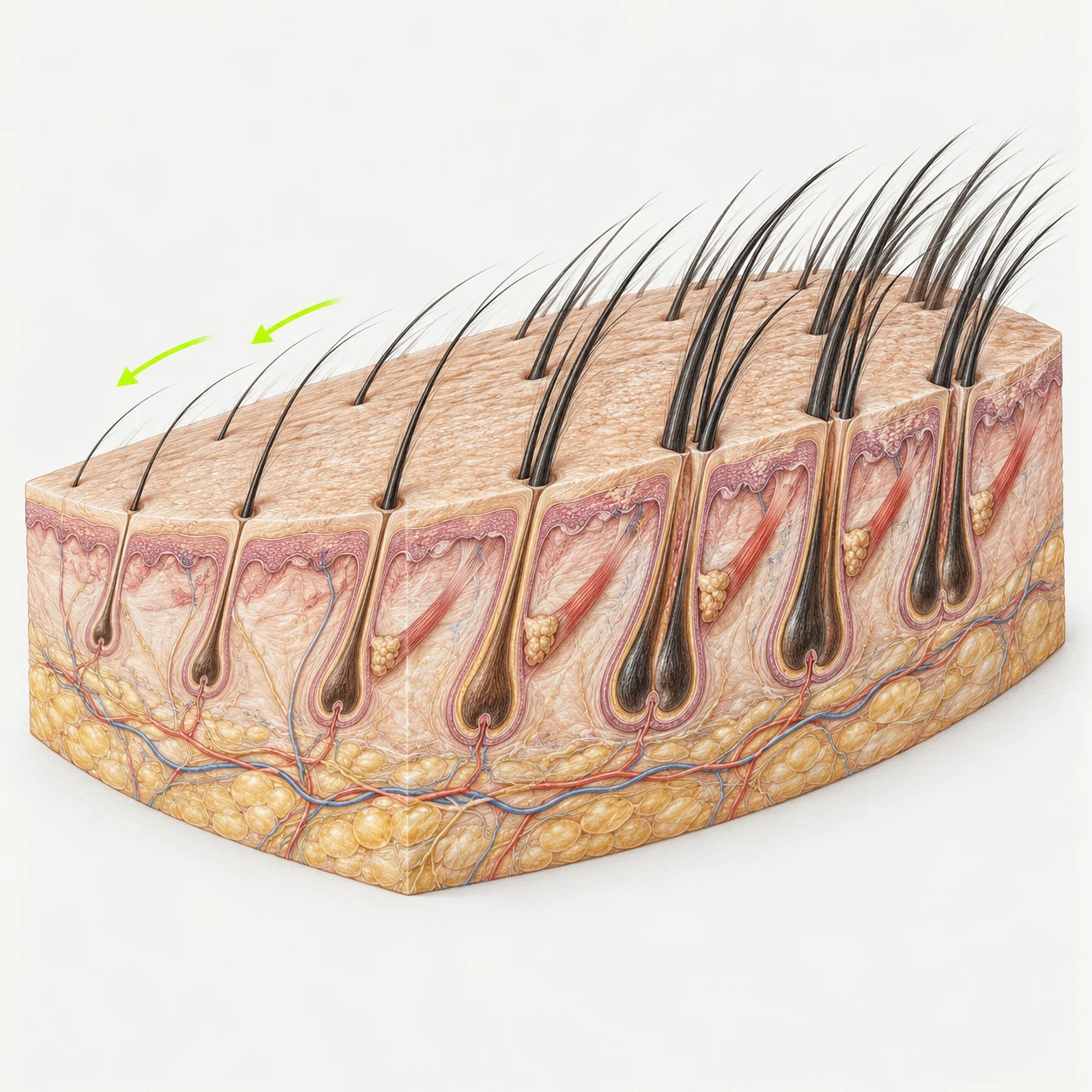
Fine hairs at the edge are arranged to blend with the hair behind them.
Fine hairs are selected for the edge so it reads like baby hairs, and thicker hairs are placed behind it at the angle of the existing hair to build density. Transplanted hair sheds temporarily before growing back, and the final result is assessed around one year after surgery.
Assess the receding corners. Both receding corners are assessed alongside the existing hairline. Before filling the M-shaped corners, we first consider whether now is the right time to transplant. The range and order differ depending on whether it is early M-shaped loss or loss that extends to the crown, and the number of grafts needed is confirmed against what the back of the scalp can supply.
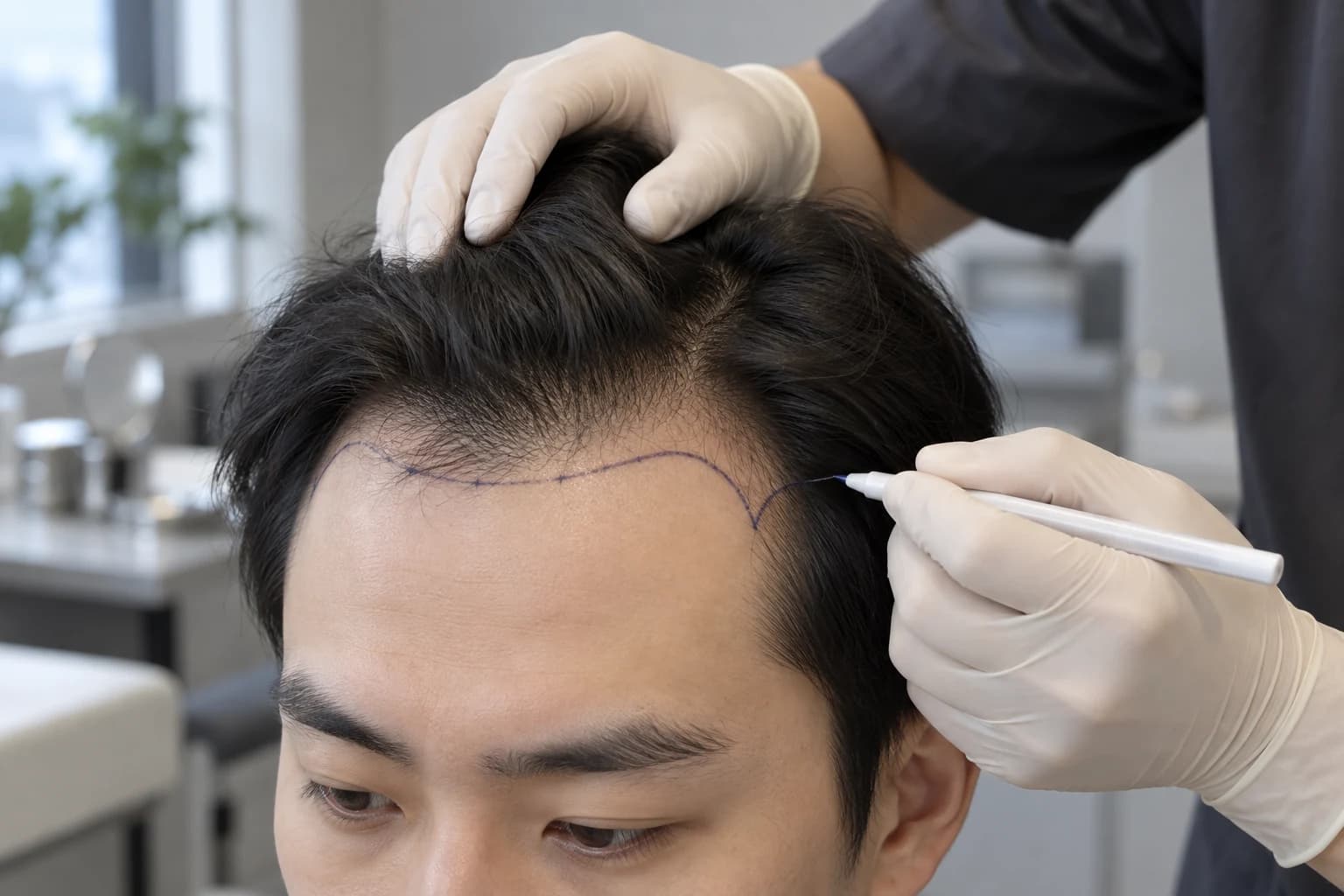
From the front to the temples, one continuous flow.
We consider both recessed temples and existing hair direction to plan a natural transition.
When is the right time for a receding hairline transplant?
Before treating a receding hairline, we assess whether it is the right time for transplantation.
A receding, M-shaped hairline is a common early pattern of male pattern hair loss, beginning at both temples.
Transplanted hair retains the characteristics of donor hair from the back of the head, while hair loss can continue in the surrounding, non-transplanted hair.
Dr. Moh Jae-seong explained the following considerations in HiDoc and Naver Knowledge iN consultations.
If you are a young person with an M-shaped hairline and initial hair loss has progressed, it is better to start drug treatment first, take it for at least 6 months, observe the progress, and then decide on surgery rather than having surgery now.
Conversely, when hair loss has stabilized or is maintained with medication, or the forehead has always been naturally broad, hairline-lowering plans may be made immediately.

Because you are currently young for hair transplantation, it would be better to start medication first, take it for at least six months, and monitor progress before surgery.
Key takeaways
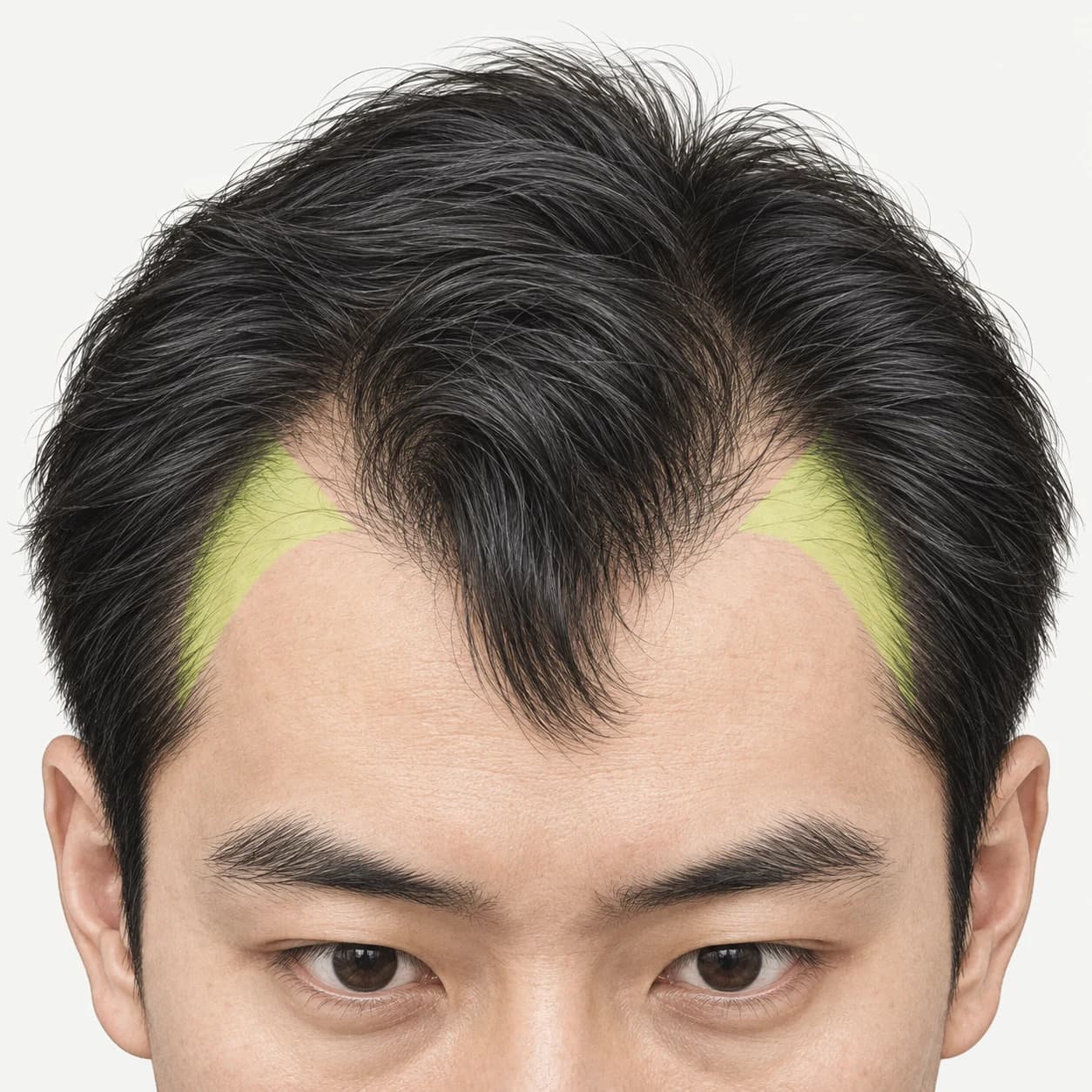
Stage of progression
The area and sequence differ depending on whether recession is early or part of extensive hair loss reaching the crown.

Age and medication
For young people with progressive hair loss, surgery timing is determined after at least six months of medication and observation.
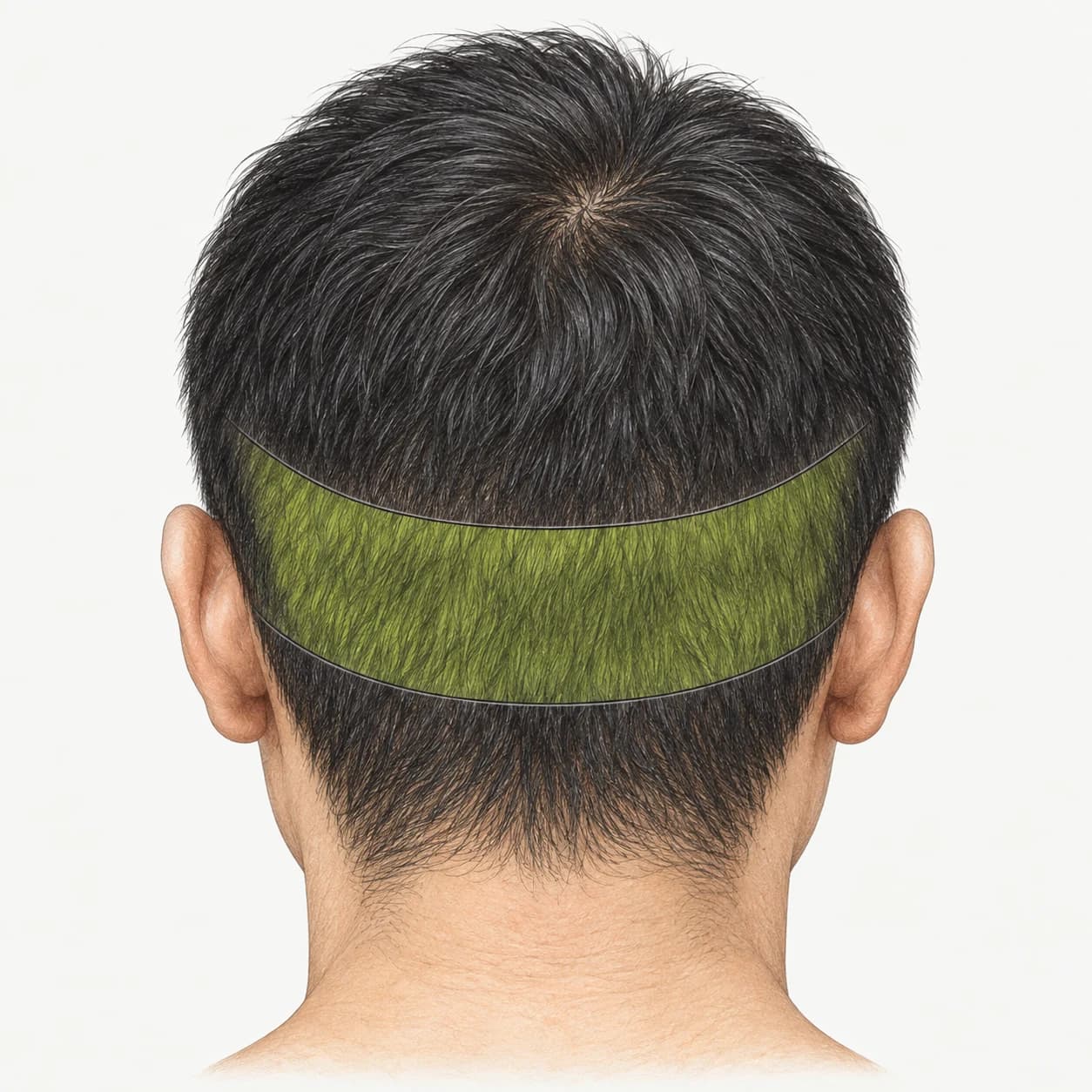
Available donor supply
We prioritize the hairline and crown within the quantity that can safely be harvested from the back of the head.
A hairline is designed, not simply filled.
We assess more than how far to lower the hairline: we also consider how the hair flows from the front and sides to the crown, along with the condition of the donor area.
Filling a receding hairline in a straight line can look unnatural. We first plan a curve that suits the face and connects to the temples.
The transplanted hair follows the thickness and curliness of the hair at the back of the head.
Fine hairs are selected through microscopic sorting for a soft, natural edge. Thicker hairs are placed further back in the appropriate direction to build density.
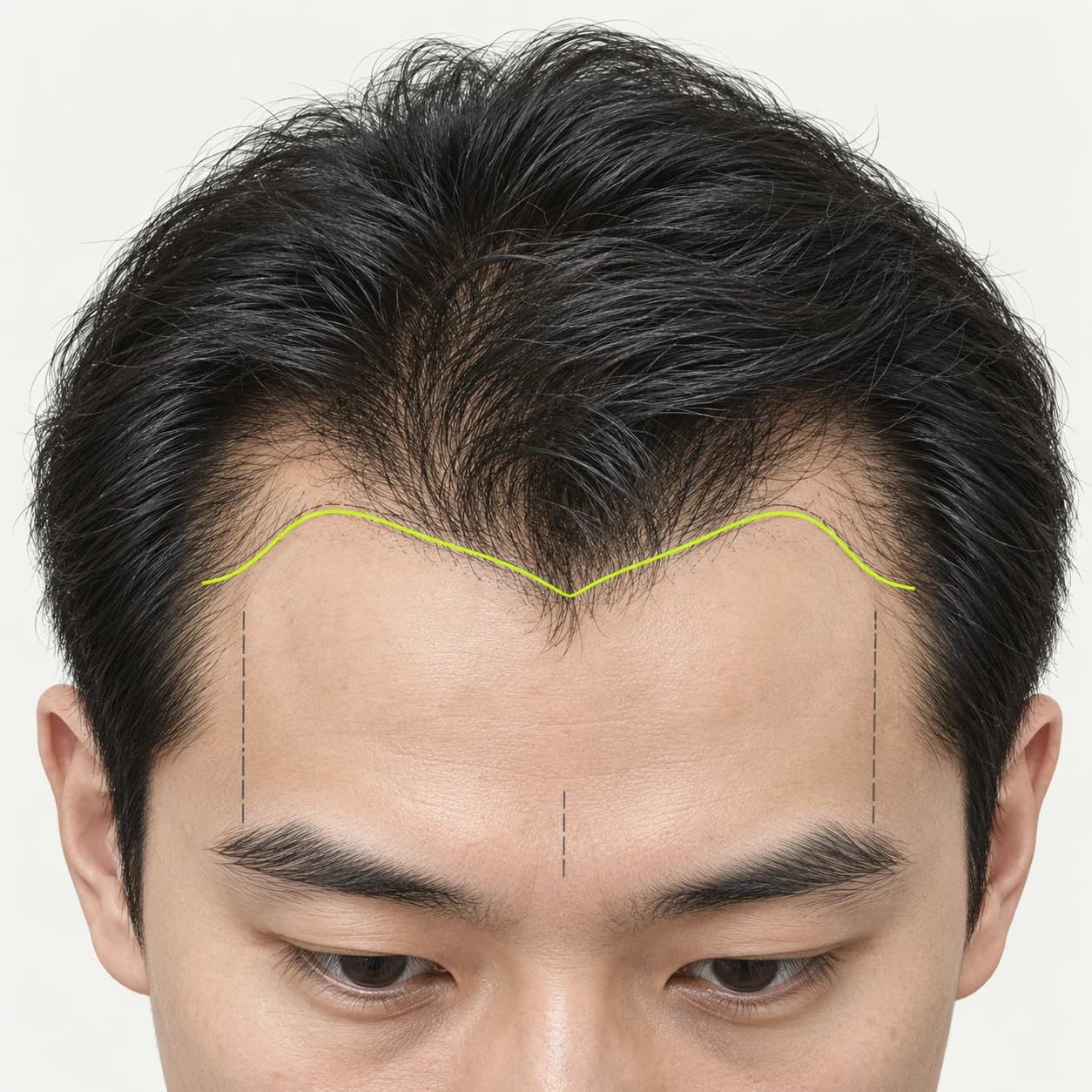
Height
We determine how far to lower the hairline within your facial proportions.
Curve
We soften the receding corners while maintaining a curve rather than a straight line.
Side connection
We plan a line that connects naturally to the temples.
Direction and thickness
Fine hairs at the edge and thicker hairs inside are implanted at angles matching existing hair.
Public Receding Hairline Before-and-After Videos
The video below is a before and after video of M-shaped hair loss surgery published on this site.
These videos show how graft numbers vary with the treatment area: 947 follicular units for early temple recession, 1,400 and 1,842 for lowering a broad receding hairline, and 3,020 for both the hairline and extensive crown hair loss. All were recorded one year after surgery.
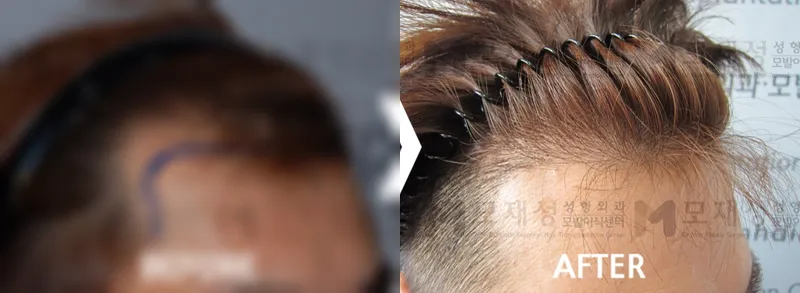
Photographs with the hair pressed down by a headband can make density appear higher than it is. The public videos were filmed with hair lifted by a comb. Results may vary with individual condition and aftercare.
- Early receding hairline
- 947 follicular unitsAfter surgery 1 year
- Lowering a broad receding hairline
- 1,400 follicular unitsAfter surgery 1 year
- Lowering a broad receding hairline
- 1,842 follicular unitsAfter surgery 1 year
- Receding forehead + extensive crown hair loss
- 3,020 follicular unitsAfter surgery 1 year
Results of surgery and treatment may vary according to individual condition and aftercare. Please review the photography conditions and follow-up timing together with public materials.
What we review together before you decide
M-shape correction is a surgery that changes the facial impression and is performed on areas where hair loss is in progress.
We first check the following during the consultation so that you can make a decision by knowing in advance the changes you can expect as well as the limitations.

Progression of existing hair loss
Transplanted hair remains, but hair loss in untransplanted hair can continue. If the area behind the transplant thins, only the transplanted section may remain, so we discuss a management plan including medication.

How far the hairline can be lowered
The amount of lowering depends on facial proportions and the number of hairs available at the back of the head. Your desired height may differ from what is possible, so we adjust the design together.

When to assess results
Transplanted hair may temporarily shed as it establishes itself before growing again. Final results are assessed around one year after surgery.

Conditions of the refund promise
If graft survival is 80% or lower at one year and three months after surgery, 80% of the surgical fee is refunded. Scar surgery and revision procedures are excluded.
Frequently asked questions
For early progressive recession, especially in younger people, it is better to begin medication, take it for at least six months, and monitor progress before deciding on surgery. If hair loss is stable or the forehead has always been broad, transplant planning can begin immediately.
Before-and-after changes in photographs
View all before-and-after cases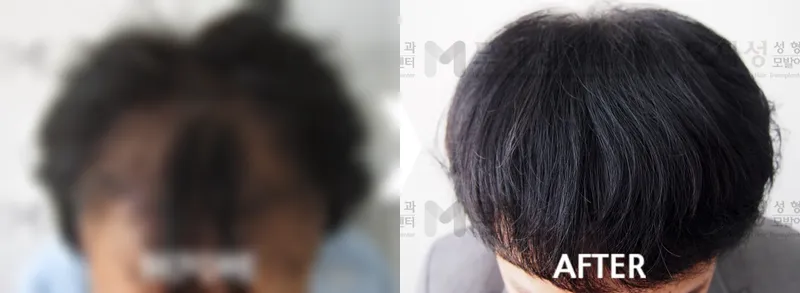
Men’s Hair Transplant
FUE with 1,700 follicular units: before-and-after photographs
Men’s Hair Transplant
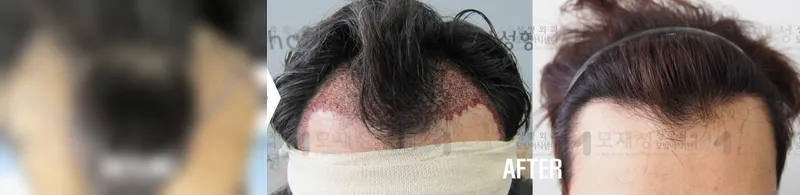
FUE with 1,870 follicular units: before and after surgery
Men’s Hair Transplant
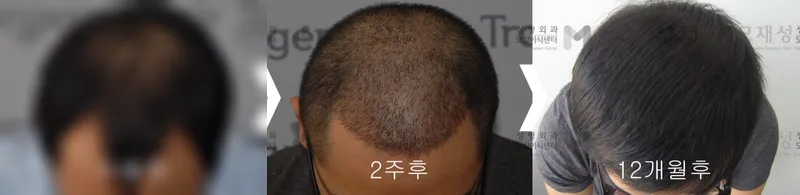
FUE with 2,900 follicular units: before and after surgery
Men’s Hair Transplant
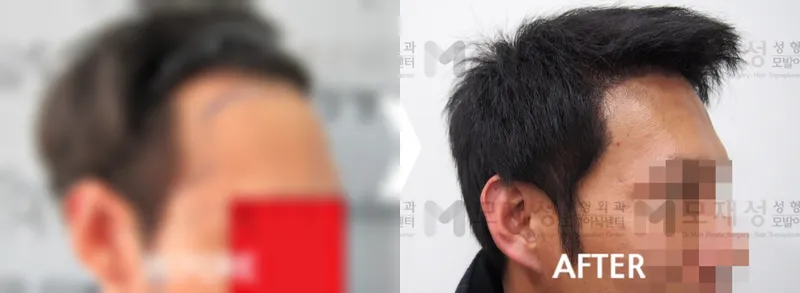
Strip hair transplant with 3,300 hairs: before and after
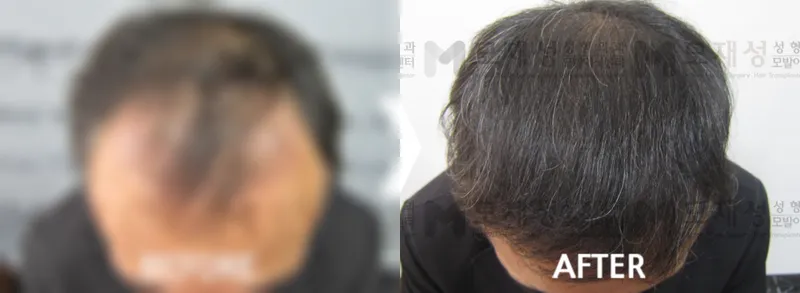
Men’s Hair Transplant
FUE with 2,500 follicular units: before and after surgery
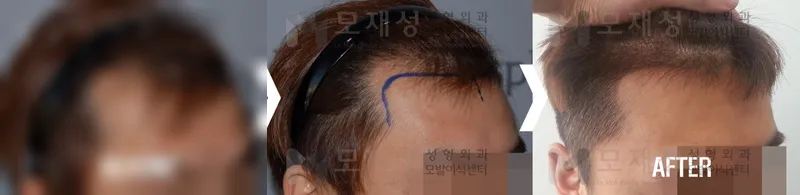
Men’s Hair Transplant
1,300 follicular units (2,800 hairs): before and after surgery

Ask every question.
Take time to decide.
We start by listening to your concerns.
Clinic Hours
- Weekdays
- 10:00 — 18:30Last check-in 17:30
- Saturday
- 10:00 — 15:00Last check-in 14:00
- Sundays and public holidays
- Closed
Registration closes one hour before clinic closing.
Directions
Units 501–502, 5F, Carocity, 156 Apgujeong-ro, Gangnam-gu, Seoul
Loading the map.