
Scar Removal Surgery vs. Scar Hair Transplant
Cutting out a scar and stitching it closed differs from transplanting hair onto the scar in how it works, in the scar it leaves and in how long treatment takes.

Cutting the scar out vs. covering it with hair
In the past, scalp scars were often treated with scar revision surgery, in which the scar area is cut open and sutured again, or with a procedure called tissue expansion.
However, past treatments were limited in their effectiveness in removing scars and had the disadvantage of leaving new scars due to surgery to remove scars.
Tissue expansion surgery, which is mainly performed on large scars, is a very complicated procedure that requires more than 2 to 3 surgeries and requires a long treatment period (at least 3 to 6 months), which has led to a significant decrease in patient satisfaction.
Hair transplantation into scalp scars usually treats a localized area. FUE is commonly used because it avoids removing a strip of donor scalp.
FUE harvests and transplants follicular units with a specially designed punch without removing a strip from the back of the head. There is no incision line or need for stitch removal, and no residual pain, swelling, or scarring, allowing a return to daily life the next day.
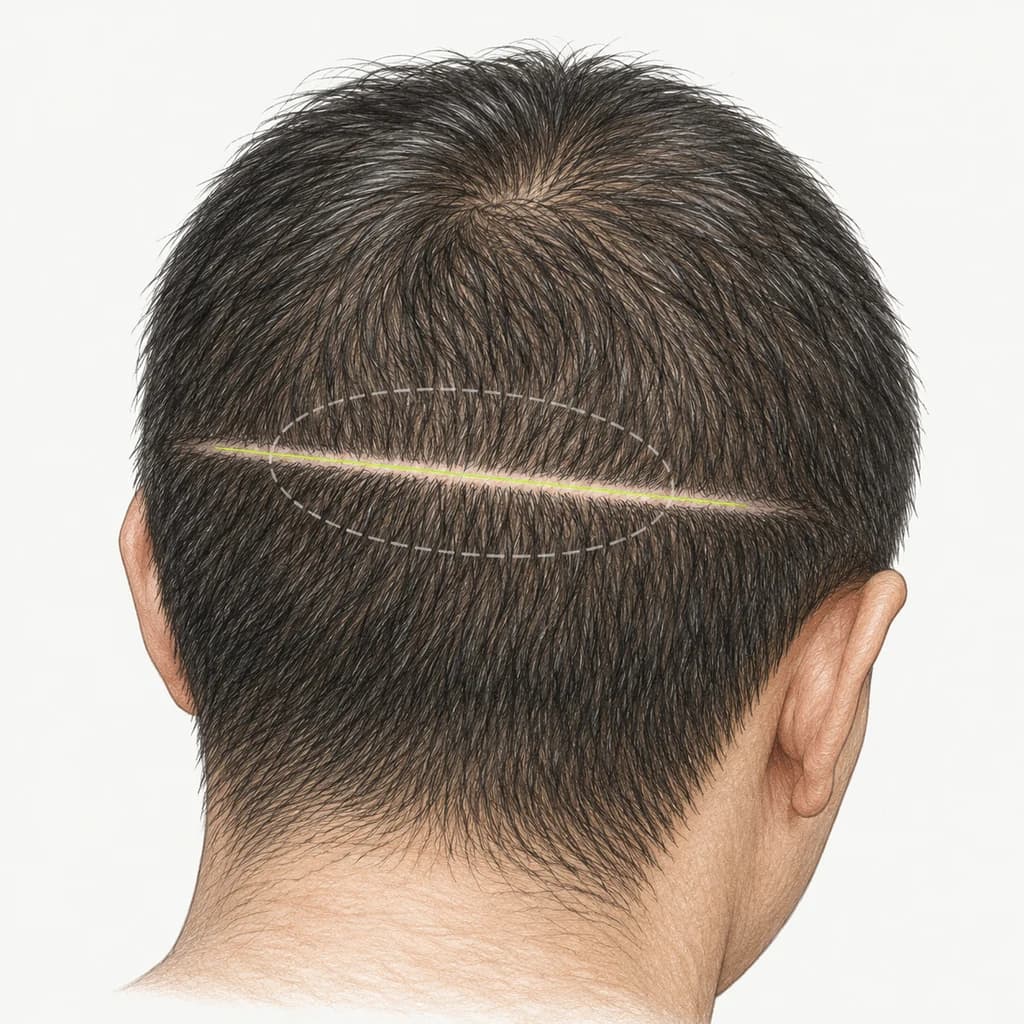
Cutting out and stitching the scar
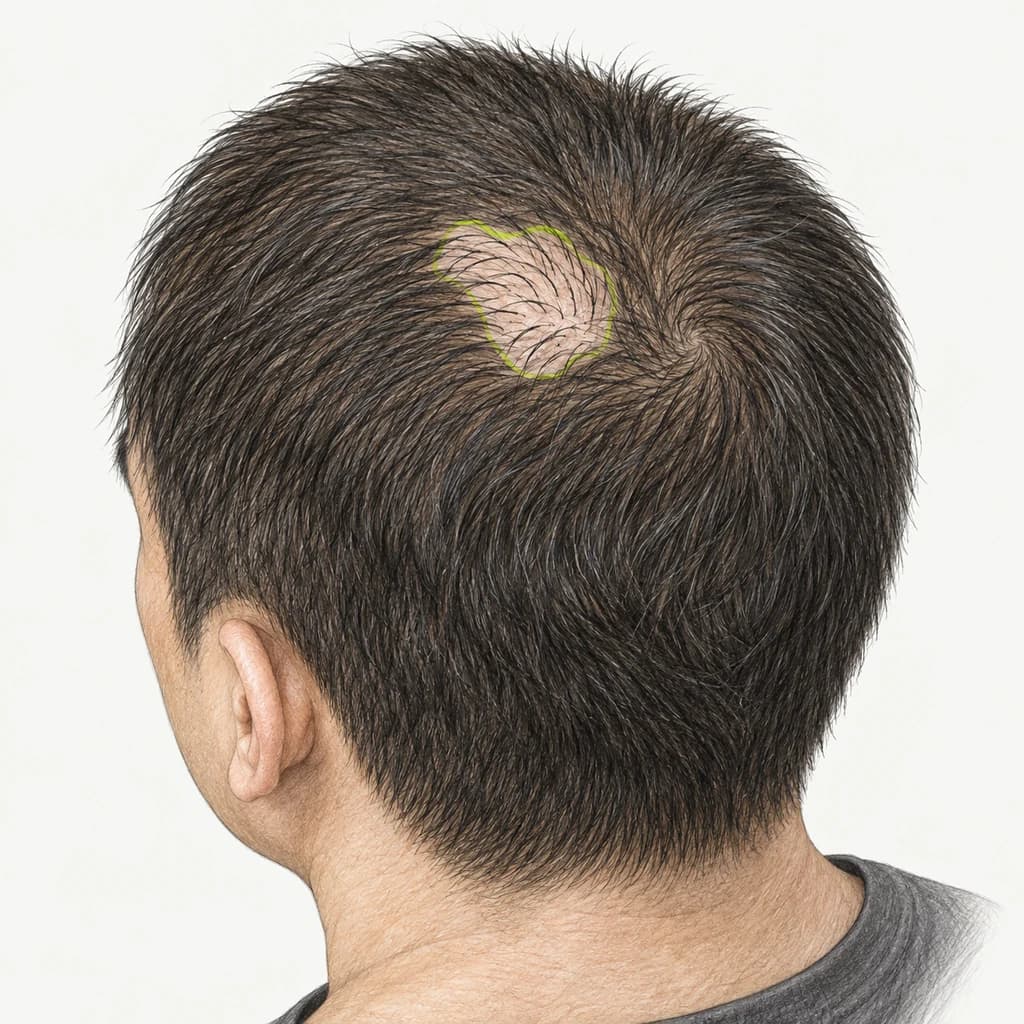
Transplanting hair onto the scar
| Category | FUE Hair Transplant | Scar Revision · Tissue Expansion (Older Treatments) |
|---|---|---|
| Treatment principle | Hair is implanted in follicular units into the scar to cover it with hair. | The scar is excised and resutured, or the skin is expanded before the scar is removed. |
| New scarring | With no incision line, no noticeable scar remains in the donor or recipient area. | Surgery to remove a scar may leave another scar. |
| Number of procedures · Duration | Planned according to the required area. Stitch removal is unnecessary. | Tissue expansion requires at least 2–3 operations and a treatment period of at least 3–6 months. |
| Return to daily life | Minimal pain and swelling allow a return to daily activities the next day. | Each operation requires a recovery period. |
Why FUE is used on scarred scalp
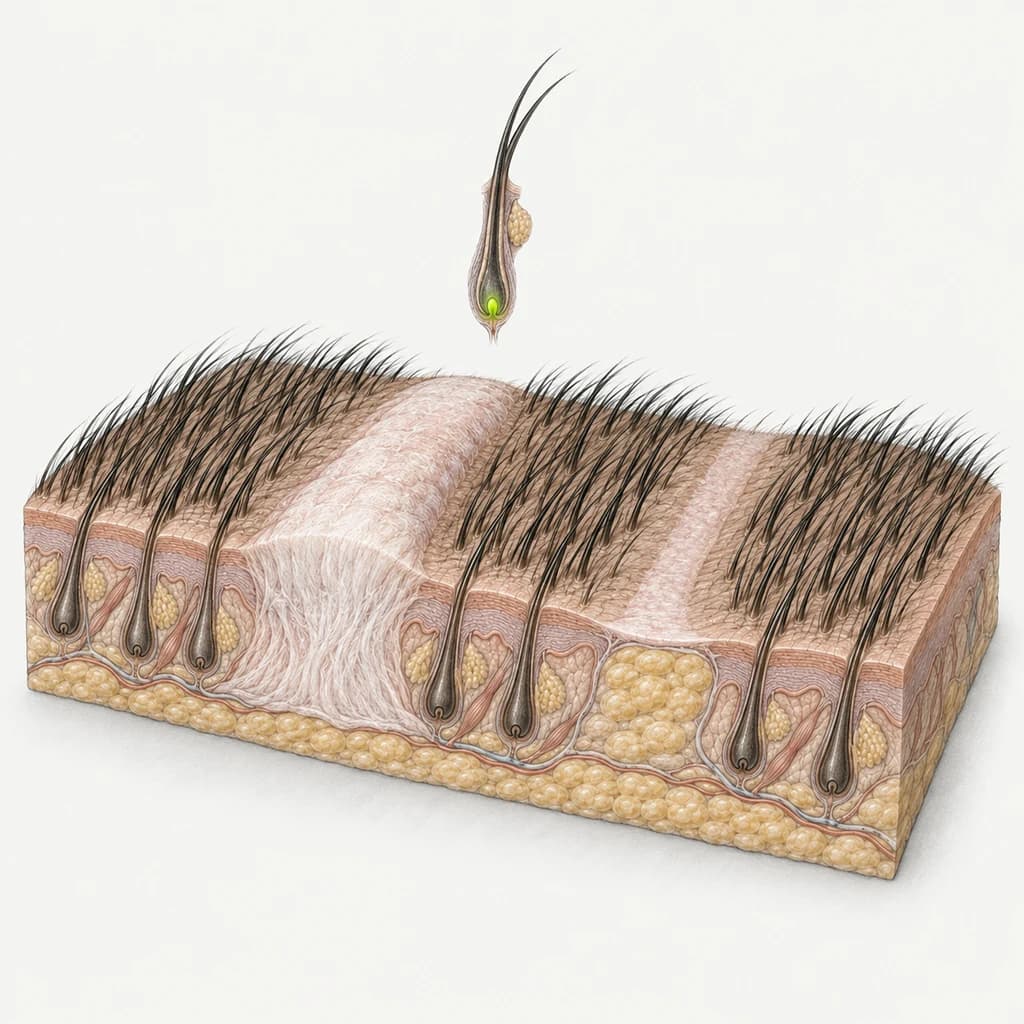
When scalp scars are treated with a hair transplant, FUE is usually chosen over the strip method so that treating one scar does not leave another at the back of the head.
The strip method can only use follicles inside the band of scalp removed from the back of the head, so choosing only healthy follicles means a wider incision. FUE picks out healthy follicles one by one with a harvesting tool, and more can be harvested if there are not enough.
Unlike normal scalp, scar tissue is either thickened by fibrosis or has become very thin. Follicles struggle to take hold in thick tissue, and transplanted hair can fall out easily from very thin tissue, so choosing healthy follicles matters all the more on scarred scalp.

Ask every question.
Take time to decide.
We start by listening to your concerns.
Clinic Hours
- Weekdays
- 10:00 — 18:30Last check-in 17:30
- Saturday
- 10:00 — 15:00Last check-in 14:00
- Sundays and public holidays
- Closed
Registration closes one hour before clinic closing.
Directions
Units 501–502, 5F, Carocity, 156 Apgujeong-ro, Gangnam-gu, Seoul