
Scalp Scar Hair Transplant
We first assess the cause and characteristics of each scalp scar, then recommend an appropriate FUE hair transplant approach.
Scalp Scar Hair Transplant
Scalp scars caused by accidents, surgery, or burns are treated with FUE tailored to the characteristics of their cause.
Procedure at a glance
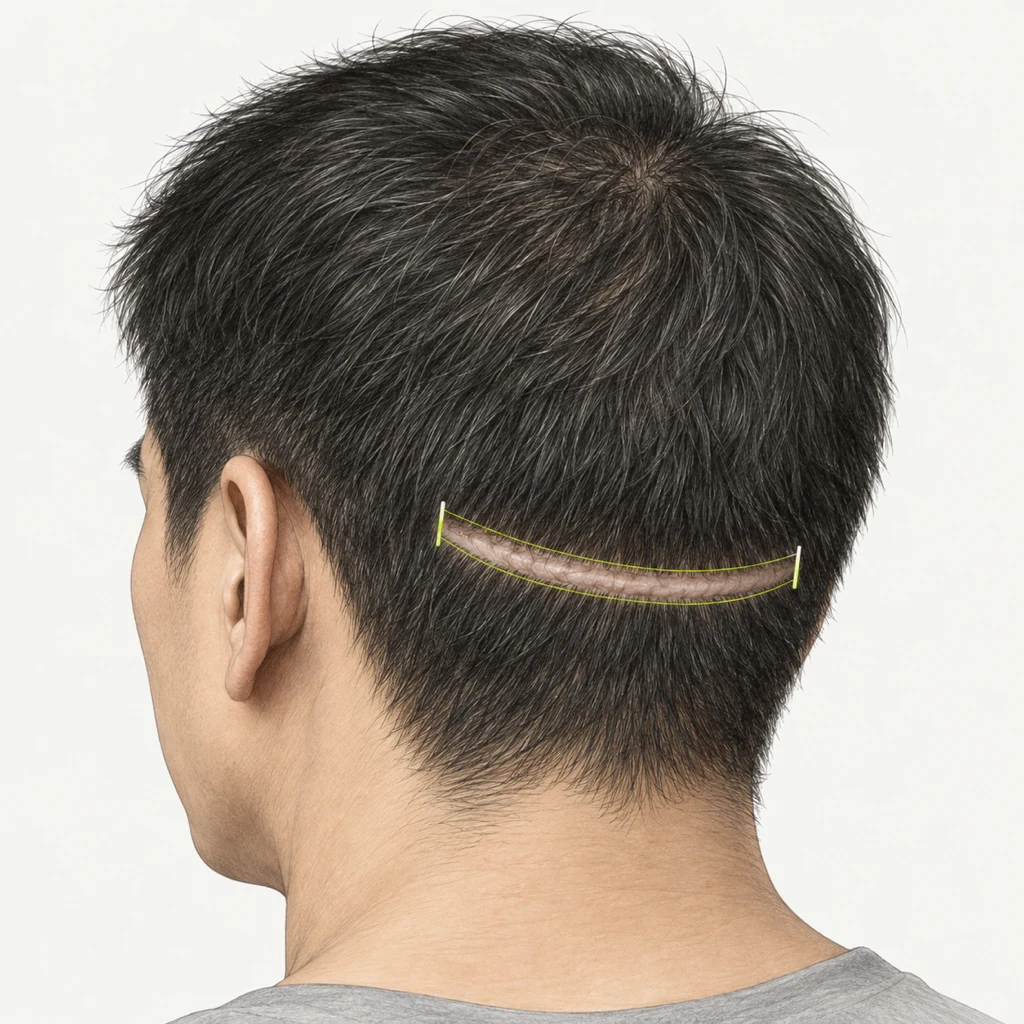
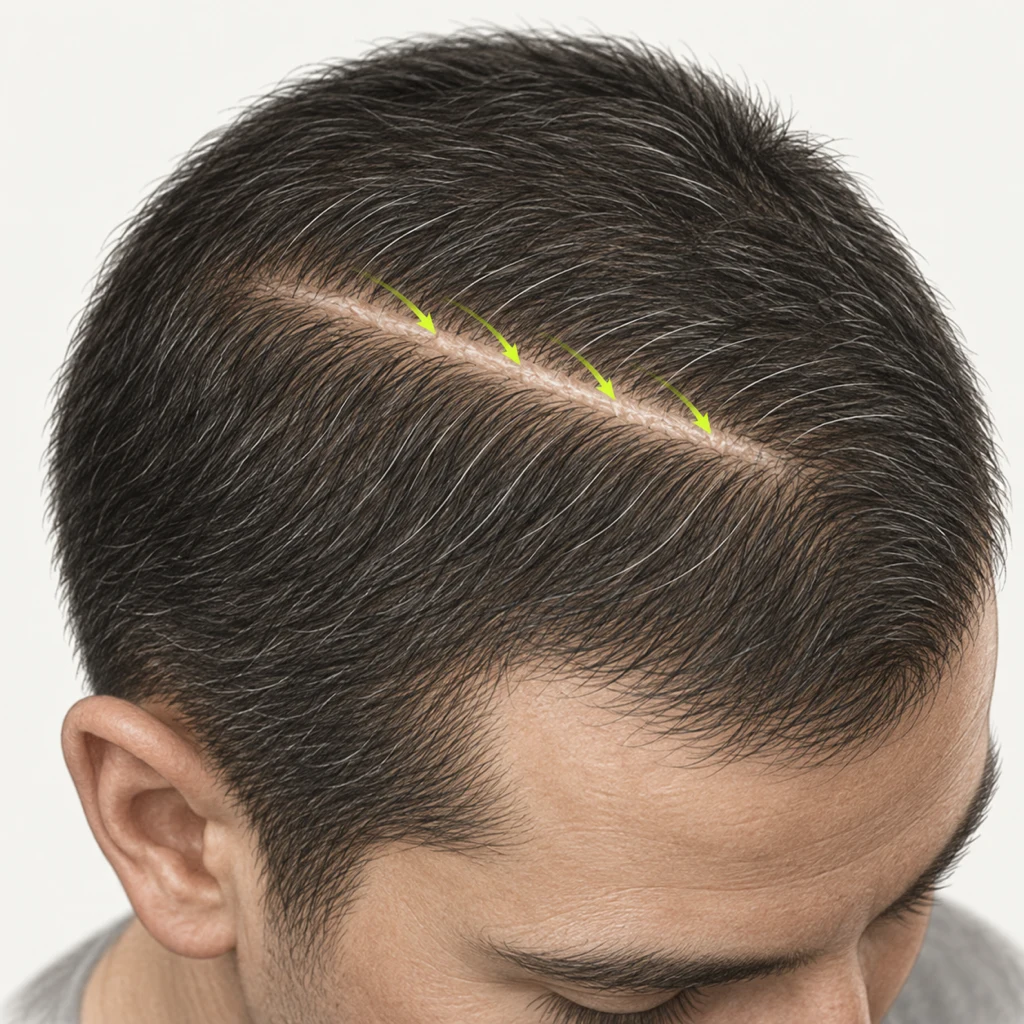
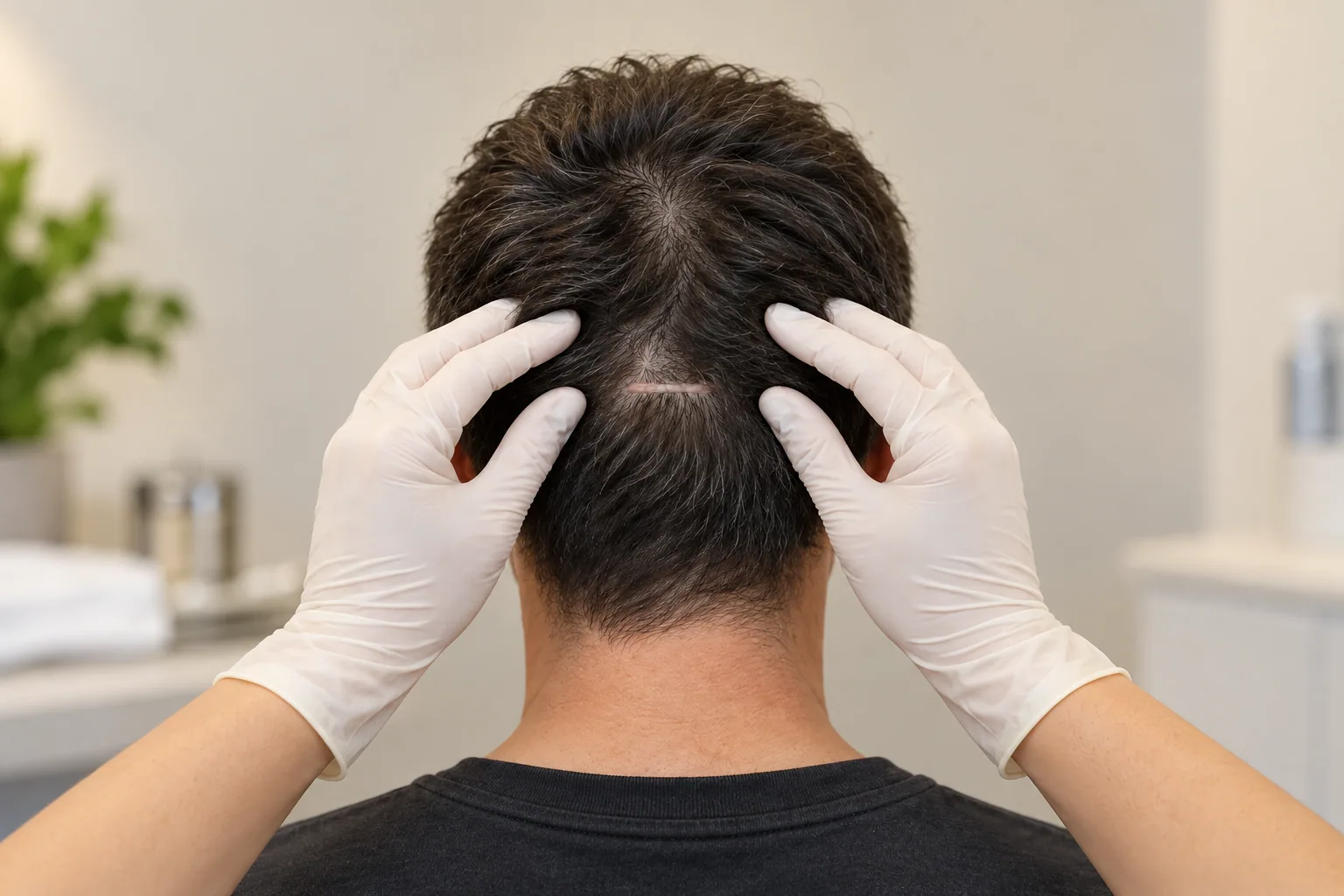
The healed scar and surrounding scalp are assessed first.
Scars arise in many ways, from accidents and surgery to burns, and no two look the same. The thickness and extent of the scar are checked, along with whether it is a case, such as alopecia areata, where diagnosis and treatment of the cause must come first.
The transplant plan follows the direction of hair growing around the scar.
The harvest range, transplant direction, and density are planned differently depending on how the scar formed. How much can be harvested from the back of the scalp depends on the density and condition of the hair there, so it is confirmed during the consultation.
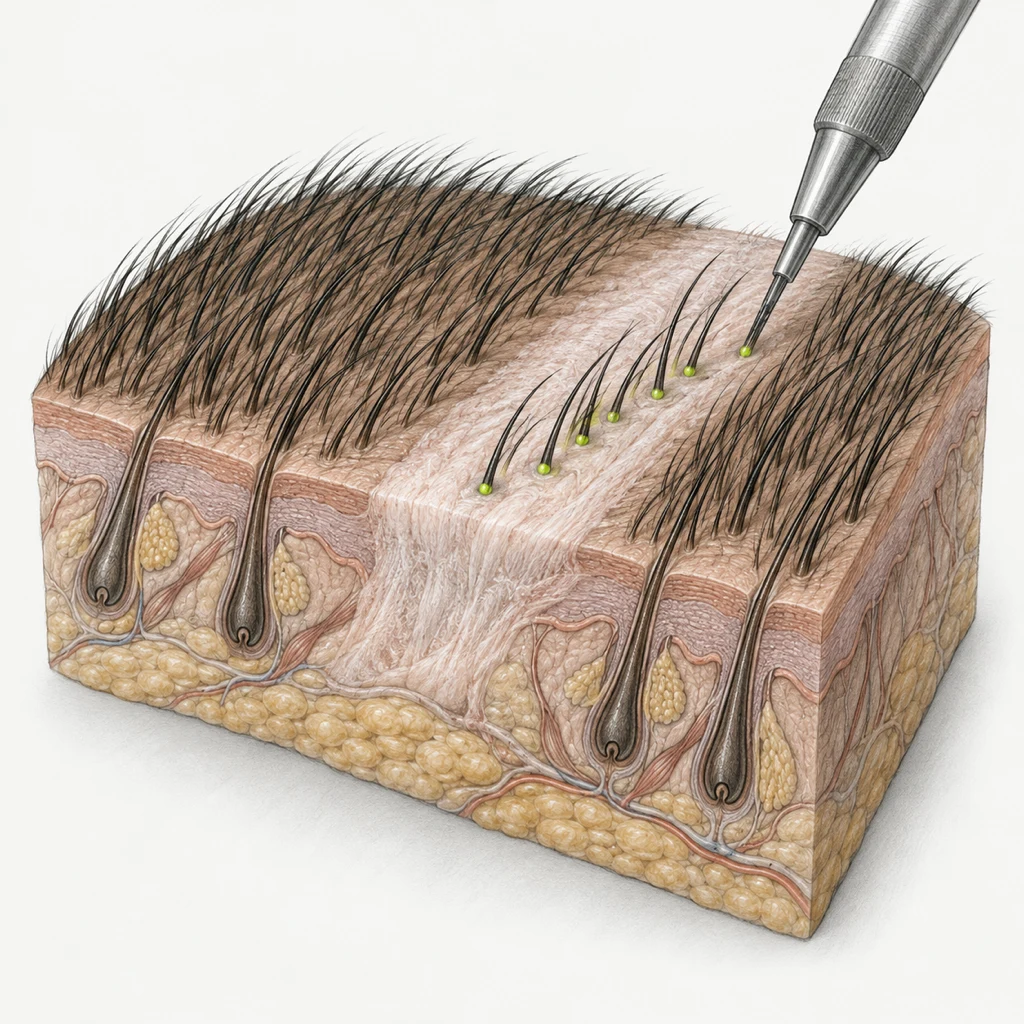
Graft placement follows an assessment of the scar and its suitability for transplantation.
Scar tissue has limited blood flow, so graft survival may be lower than in other areas, and density is adjusted to the thickness and condition of the scar. For wide or deep scars, dividing the work into sessions while monitoring progress may be safer than filling them all at once.
Assess the scar. The healed scar and surrounding scalp are assessed first. Scars arise in many ways, from accidents and surgery to burns, and no two look the same. The thickness and extent of the scar are checked, along with whether it is a case, such as alopecia areata, where diagnosis and treatment of the cause must come first.
We begin by assessing the scar.
We review the scar’s cause and extent, along with nearby hair direction, before considering transplantation.
What is the best treatment for scalp scars?
Moh Jae-seong’s Scalp Scar Treatment Research Institute uses Dr. Moh Jae-seong’s unique know-how to perform various hair transplant methods suitable for treating scalp scars.
The causes of scalp scars are very diverse, including congenital or accidental wounds, scars from plastic surgery, scars from neurosurgery, and extensive burns of the scalp.

No two scars are alike. We first assess the cause and characteristics of the scalp scar and recommend an FUE approach suited to the individual.
The Moh Jae-seong Scalp Scar Treatment Institute accurately assesses the cause and characteristics of scalp scars and treats them with FUE tailored to each individual.
What we explain first during consultation
Scar treatment has different conditions from general hair loss treatment.
We first check the following during the consultation so that you can make a decision by knowing in advance the changes you can expect as well as the limitations.
Graft survival in scar tissue
Scar tissue has less blood flow than normal scalp, so transplanted follicles may have a lower survival rate than in ordinary areas. Implantation density is adjusted according to the scar’s thickness and condition.
Number of procedures
For broad or deep scars, staged treatment with progress monitoring may be safer than placing grafts at high density in one session. The anticipated number of procedures is explained during consultation.
Donor area condition
Follicles are harvested from the back of your own head. The available quantity depends on donor hair density and condition and is assessed during consultation.
Exceptions to the refund promise
The promise to refund 80% of the surgical fee if a hair transplant fails does not apply to scar surgery or revision procedures.
Frequently asked questions
Follicles can be transplanted into scar tissue. However, because blood flow is reduced, survival varies with scar condition. We assess the scar’s thickness and extent during consultation before planning treatment.

Ask every question.
Take time to decide.
We start by listening to your concerns.
Clinic Hours
- Weekdays
- 10:00 — 18:30Last check-in 17:30
- Saturday
- 10:00 — 15:00Last check-in 14:00
- Sundays and public holidays
- Closed
Registration closes one hour before clinic closing.
Directions
Units 501–502, 5F, Carocity, 156 Apgujeong-ro, Gangnam-gu, Seoul